

Blogging is not just a trend; it is a fundamental aspect of online communication and marketing in 2025.
With a staggering 600 million blogs active worldwide, this digital landscape offers immense opportunities for individuals and businesses alike.
If you are looking to understand the power of blogging, how it can benefit you, and what the latest statistics reveal, you are in the right place.
This article dives deep into the world of blogging, providing comprehensive insights, actionable data, and emerging trends to help you succeed.
The Undeniable Impact of Blogging

In today’s competitive online environment, having a blog is a game-changer. Businesses that consistently maintain a blog see a dramatic 434% increase in indexed pages.
This means search engines like Google find more of their content, significantly boosting their visibility and chances of attracting new audiences.
The benefits extend beyond just visibility. Websites with blogs experience a 55% surge in overall traffic, and B2B companies specifically report a 67% increase in leads directly attributed to their blogging efforts.
A compelling 80% of businesses now recognize and utilize blogging as a crucial marketing strategy.
Key Blogging Statistics for 2026: A Quick Glance
Here are some of the most impactful blogging statistics you need to know in 2025:
- Global Reach: Over 600 million active blogs exist worldwide, with approximately seven new posts published every single day.
- Vast Readership: A remarkable 83% of all internet users, which equates to roughly 4.44 billion people, actively read blogs.
- Lead Generation Powerhouse: 76% of content marketers effectively use blogs to generate valuable leads.
- Traffic Driver: Businesses with a blog on their website see a substantial 55% increase in overall website traffic.
- Reading Habits: Most readers (73%) tend to skim blog posts, while 23% dedicate their time to reading them thoroughly.
- Corporate Adoption: Over half (54%) of Fortune 500 companies maintain their own public blogs, highlighting corporate trust in the medium.
- Marketing Priority: Marketers who prioritize blogging are an impressive 13 times more likely to achieve profitable results.
Also read about: WordPress Statistics
The Current State of Blogging: What the Numbers Reveal
Let’s explore the granular details of blogging in 2025, from post length to SEO effectiveness and content update strategies.
Content Creation and Optimization
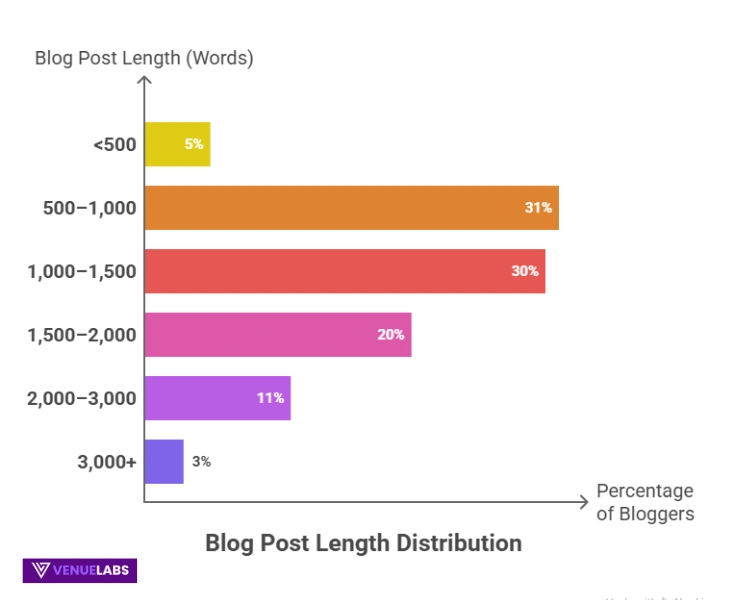
- Average Post Length: The typical blog post in 2025 is approximately 1,416 words long. However, another source suggests the average is closer to 2,330 words. This variation highlights the diverse content strategies bloggers employ.
- Search Engine Visibility: Blogs significantly enhance a website’s search engine presence, leading to 434% more pages indexed by search engines.
- Inbound Links: Having a blog can result in a remarkable 97% increase in inbound links, which drives more referral traffic and improves search engine rankings.
- Content Updates: While crucial, only 38% of bloggers consistently update their older articles. However, 34% of businesses report strong results from updating their content, indicating a clear missed opportunity for many.
- SEO Effectiveness: A significant 72% of online marketers state that content creation, especially blogging, is the most effective SEO strategy.
- Blogging Frequency and Success: 57% of bloggers who post daily claim they are successful, suggesting consistency is a strong predictor of positive outcomes.
General Blogging Trends and User Behavior
- Influencer Collaboration: 10% of bloggers actively work with influencers to expand their reach and increase traffic.
- Pre-Purchase Research: A substantial 44% of shoppers consult four to five blogs before making a purchase decision.
- Engagement Time: Internet users in the USA spend three times more time reading blogs than emails.
- Platform Dominance: Tumblr hosts over 606 million blogs, and WordPress sees approximately 409 million users viewing over 20 billion pages every month.
- Reading Attention Span: An average reader spends about 37 seconds on a blog post.
- Conversion and Word Count: Blog posts exceeding 2,450 words generally achieve the best conversion results, contrasting with the preference for shorter posts among some readers.
- Industry Growth: The blogging industry projects a massive growth of $417.85 billion between 2021 and 2025, indicating a robust and expanding market.
- Marketing Manager Adoption: A high 93% of marketing managers incorporate blogs into their content marketing strategy.
- User Experience: More than 50% of blog readers will stop reading if they encounter any issues during their reading experience, emphasizing the importance of a smooth and accessible blog.
- Social Media Promotion: An overwhelming 97% of bloggers leverage social media to boost their blog’s exposure.
Also read about: SEO Statistics
Crafting Engaging Content: Blogging Content Statistics
The quality and format of your blog content are paramount. Let’s delve into what resonates with readers and how to optimize your posts for better engagement and ranking.
Reader Preferences and Content Formats
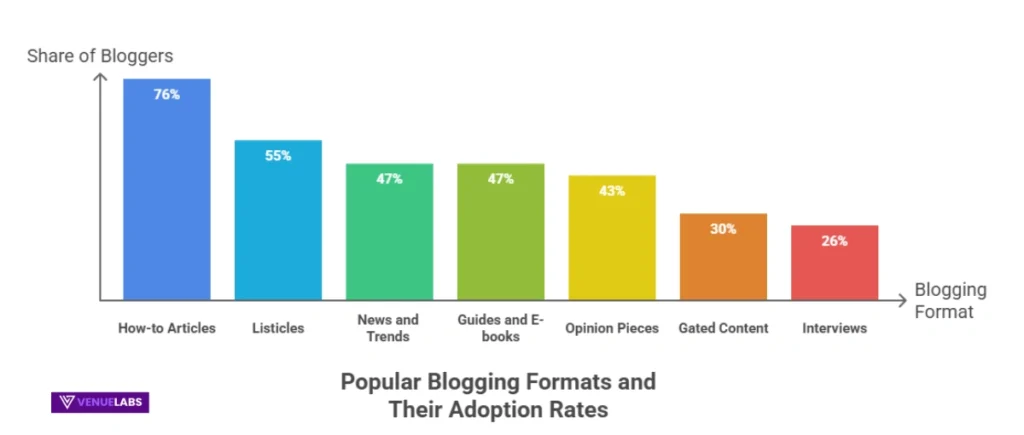
| Blogging Format | Share of Bloggers |
| How-to Articles | 76% |
| Listicles | 55% |
| News and Trends | 47% |
| Guides and E-books | 47% |
| Opinion Pieces | 43% |
| Gated Content | 30% |
| Interviews | 26% |
| Infographics | 26% |
| Roundups | 23% |
| Webinars | 20% |
Posting Frequency and Headline Optimization
- Blogging Frequency: According to Statista, 23% of bloggers publish several blogs per month, making it the most common frequency.
Here is a table illustrating the posting frequency of bloggers:
| Posting-Frequency | Share of Respondents |
| Daily | 2% |
| 2-6 posts per week | 13% |
| Weekly | 22% |
| Several Per Month | 23% |
| Monthly | 16% |
| Less Than Monthly | 7% |
| Irregular Intervals | 16% |
- Headline Length: Headlines ranging from 14-17 words receive 77% more social shares than shorter headlines.
- Question Headlines: Headlines that include a question mark (“?”) garner 23% more social shares.
- H1 Tag Optimization: Blog posts with seven or fewer words in their H1 tag achieve a 36% higher organic traffic rate compared to blogs with H1 tags of fourteen or more words. Remember to use only one H1 tag per post, while multiple H2, H3, and H4 tags are acceptable.
Also read about: Tumblr Statistics
Mastering Search Engine Optimization (SEO) for Blogs
SEO is non-negotiable for blog success, especially as ad blockers impact paid rankings (an estimated 43% of people globally use them).
Critical SEO Statistics for Bloggers
- SEO Importance: A substantial 71% of bloggers consider Search Engine Optimization the most vital method to increase blog traffic.
- Traffic Correlation: Businesses with a dedicated blog section experience 55% more traffic than those without.
- Backlink Acquisition: Blogs generally acquire 97% more backlinks, which directly correlates with higher Google rankings.
- Video Content Impact: Blogs that incorporate video receive three times more inbound links than plain text posts.
- Search Engine Dominance: 68% of all online experiences begin with a search engine, with Google holding a massive 91.47% share of the search engine market.
- First Page Power: The first page of Google captures over 71% of all web traffic, emphasizing the importance of top rankings.
- Zero Organic Traffic: A sobering 91% of web pages receive zero organic traffic from Google, highlighting the competitive nature of SEO and the need for effective strategies.
- Keyword Research: 85% of bloggers perform keyword research, with Semrush and Ahrefs being popular tools.
- Content Updates and SEO: Updating old content is the second most effective way to maintain relevance in blogging, right after publishing new content.
- Improving Rankings: 45% of marketers believe “researching and adding relevant keywords in addition to the primary keywords” helps improve blog rankings.
- Answering User Questions: Another 45% of marketers claim that “analyzing and addressing customer questions in blog posts” significantly boosts their rankings.
- Readability: Blogs with “easy-to-read” text tend to perform better, with 33.45% of high-performing blogs being easy to read versus 16.73% being difficult.
Essential Blogging KPIs to Track for SEO Success
To measure your SEO efforts effectively, monitor these key performance indicators:
- Overall blog traffic.
- Breakdown of traffic’s source (organic, social, referral, direct).
- Top-viewed posts.
- Inbound links per post.
- Comments and social shares per post.
- Blog’s homepage visits.
- Number of posts published.
- Leads and their source breakdown.
- Active RSS subscribers.
- Conversion Rates.
- Email Subscribers.
Marketing Your Blog: Strategies for Wider Reach
Creating great content is only half the battle; effective promotion is equally vital.
Blog Marketing Statistics
- Cost-Effective Marketing: Blogging is approximately 62% cheaper than traditional marketing methods, offering a high return on investment.
- Traffic Analysis: One in three bloggers regularly analyzes their website’s traffic, with most checking at least three times a week.
- Lead Generation Volume: Companies that publish 16 or more blogs monthly generate an impressive 4.5 times more leads.
- Social Media Dominance: Social media is the most popular channel for driving traffic to a blog, with 90% of bloggers promoting their content via social media.
- Email Marketing: According to Statista, 62% of marketers use emails to drive blog traffic.
- Promotion and Earnings: 70% of bloggers who earn $50k/year claim they actively promote their blogs, showcasing a strong correlation between promotion and financial success.
- Influencer Collaboration Benefits: Bloggers who collaborate with influencers generally achieve better results.
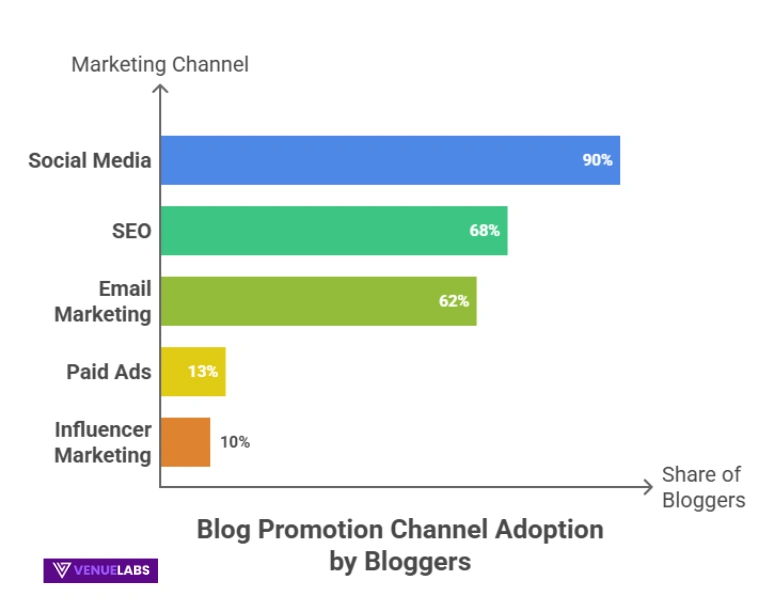
Here is a table detailing the forms of marketing bloggers use to promote their content:
| Form of Marketing | Share of Respondents |
| Social Media | 90% |
| SEO | 68% |
| E-mail Marketing | 67% |
| Paid Ads | 13% |
| Influencer Marketing | 10% |
WordPress: The Foundation for Millions of Blogs
WordPress remains the leading open-source content management system, hosting a significant portion of the world’s blogs.
Key WordPress Statistics
- Website Hosting: Over 478 million websites currently use WordPress.
- Blog Hosting: WordPress hosts over 60 million blogs on its platform.
- Content Volume: Users publish over 70 million new posts and 77 million new comments on WordPress every single month.
- Global Language Support: WordPress blogs are written in 120 different languages worldwide.
Here is a table showing the breakdown of the top 10 languages used on WordPress to publish blogs:
| Languages | Share |
| English | 71% |
| Spanish | 4.7% |
| Indonesian | 2.4% |
| Portuguese | 2.3% |
| French | 1.5% |
| Russian | 1.3% |
| German | 1.2% |
| Italian | 1% |
| Turkish | 0.7% |
| Dutch | 0.6% |
Emerging Blogging Trends to Leverage in 2026
The blogging landscape is dynamic. Staying ahead means embracing new trends.
Key Trends Dominating Blogging
- The Rise of AI: Generative AI tools are making content creation more accessible and efficient. Bloggers are extensively using AI for outlining posts, identifying content gaps, optimizing content for NLP guidelines, and even generating ideas (43% of bloggers). In fact, 34% of companies have already implemented AI for their blog posting. The integration of AI for writing headlines (29%) and outlines (28%) is also common.
- Integration of Responsive Infographics: As 73% of blog readers skim posts, visually engaging content like infographics becomes crucial. Responsive infographics will play a growing role in keeping audiences engaged and encouraging them to return for more.
- Increased Importance of Social Signals: While backlinks remain a critical Google ranking factor, social signals – traffic coming to your blog through social media – are gaining significant traction. Social signals already played a substantial role in 2024 and will continue to be a game-changer for bloggers in 2025.
- Personalization and Branding: With millions of blogs competing for attention, standing out requires a strong brand identity. People naturally trust brands more. By creating a unique brand around your blog, you gain a significant edge, especially since many online blogs lack a distinct “face” or brand personality.
Quora and Reddit Insights: What Bloggers Are Asking
Beyond the statistics, real-world questions on platforms like Quora and Reddit reveal evolving concerns and interests among bloggers.
- “How can I use AI to personalize my blog content for different audience segments?” Bloggers are actively seeking ways to move beyond generic content, using AI to tailor articles to specific reader demographics and interests. This aligns with the trend of personalization and branding.
- “What are the best strategies to increase blog traffic from TikTok and other short-form video platforms?” The rise of platforms like TikTok means bloggers are exploring new avenues beyond traditional social media to drive traffic, emphasizing the growing importance of diverse social signals.
- “Is guest blogging still effective for SEO in 2025, or are there better ways to build backlinks?” While guest blogging remains a tactic, bloggers are continually evaluating its effectiveness and exploring alternative, perhaps more organic, methods of backlink acquisition, especially in light of Google’s evolving algorithms.
- “How do I create interactive content for my blog that keeps readers engaged for longer than 37 seconds?” With the average reading time being relatively short, bloggers are keen on implementing interactive elements like quizzes, polls, and dynamic infographics to boost engagement and time on page.
These questions highlight a shift towards more sophisticated content strategies, diverse traffic sources, and an ongoing adaptation to algorithm changes and reader behavior.
FAQs About Blogging Statistics
1. Is blogging still relevant in 2025 with the rise of video and social media?
Yes, blogging remains relevant. 83% of internet users read blogs, and businesses with blogs see 55% more traffic. Blogs provide in-depth content that drives organic traffic and establishes credibility.
2. How long should my blog posts be in 2025?
Blog posts should be 1,416–2,330 words for depth, but 75% of readers prefer posts under 1,000 words. Posts over 2,450 words tend to have the best conversions. A mix of both is ideal.
3. What are the best strategies to increase blog traffic in 2025?
Focus on SEO, leverage social media, update old content, and integrate video or infographics for better engagement and more inbound links.
4. How can AI help my blogging efforts in 2025?
AI tools assist with idea generation, headlines, outlines, and SEO optimization, making content creation more efficient and effective.
5. Is it important to update old blog content?
Yes, updating old content improves SEO, increases organic traffic, and keeps information relevant, enhancing user experience and content authority.
Also Read:
- Artificial Intelligence Statistics
- Gemini Statistics
- Shopify Statistics
- Metaverse Statistics
- Live Streaming Statistics
Conclusion: Blogging’s Enduring Power in 2026
Blogging remains an incredibly powerful and essential tool for communication, marketing, and community building in 2025.
With over 600 million active blogs and 83% of internet users reading blogs regularly, its reach is undeniable. Businesses leverage blogs to generate 55% more traffic and 76% of content marketers rely on them for lead generation.
While average blog posts are becoming longer (around 2,330 words), a significant 75% of readers prefer shorter articles (under 1,000 words), emphasizing the need for concise, impactful writing.
Key trends like the widespread integration of AI (34% of companies), the use of responsive infographics, and a heightened focus on social signals and distinct branding are shaping the future of the blogosphere.
By understanding and adapting to these blogging statistics 2025 and trends, both individuals and businesses can unlock the full potential of blogging to inform, engage, and convert their audiences.
Source: Orbit Source Media, Worldometer



Comments
Be the first to leave a comment.