
Lead generation is the heartbeat of any thriving business. It’s about finding and attracting potential customers who are genuinely interested in what you offer.
Imagine a constant stream of people eager to learn about your products or services – that’s the power of effective lead generation.
In 2026, understanding the latest Lead Generation Statistics 2026 is not just an advantage; it’s a necessity for staying ahead in a competitive market.
This article dives deep into the numbers, trends, and actionable strategies you can use to transform your lead generation efforts and drive significant growth.
Why Lead Generation Matters More Than Ever
Every business owner, marketer, and sales professional knows the challenge: you need customers to grow, and you need a system to bring those customers in.
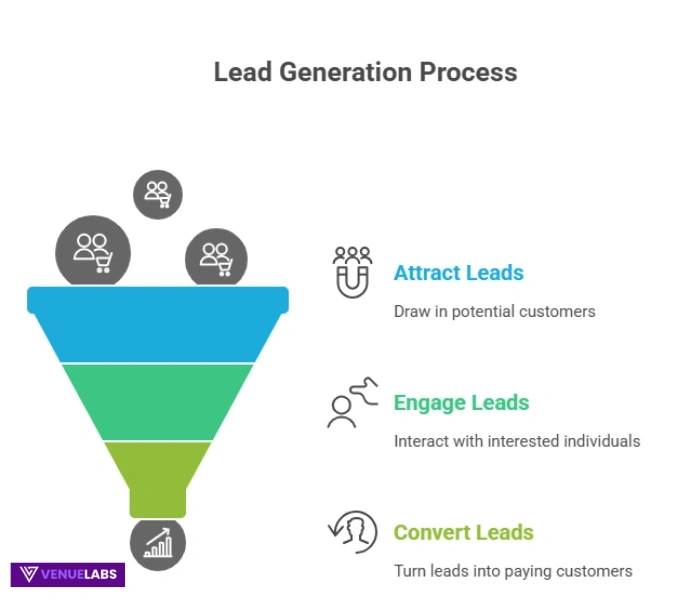
That’s where lead generation steps in. It’s the process of identifying and cultivating potential clients who have shown some level of interest in your brand.
Without a steady flow of leads, your sales pipeline can dry up, and your business can stagnate.
Think about it:
- More than 85% of companies consider lead generation a top marketing priority. This isn’t just a fleeting trend; it’s a fundamental aspect of modern business strategy.
- However, the journey isn’t always smooth. 61% of companies find it challenging to generate strong, reliable leads. This highlights a common struggle and the immense value of understanding what truly works.
- The stark reality is that 79% of generated leads never convert into sales. This statistic isn’t meant to discourage you; it’s a call to action to refine your approach and focus on quality over quantity.
By understanding the landscape of Lead Generation Statistics 2026, you can avoid common pitfalls and build a lead generation machine that consistently delivers results.
Also read about: Referral Marketing Statistics
The Big Picture: Key Lead Generation Statistics for 2026
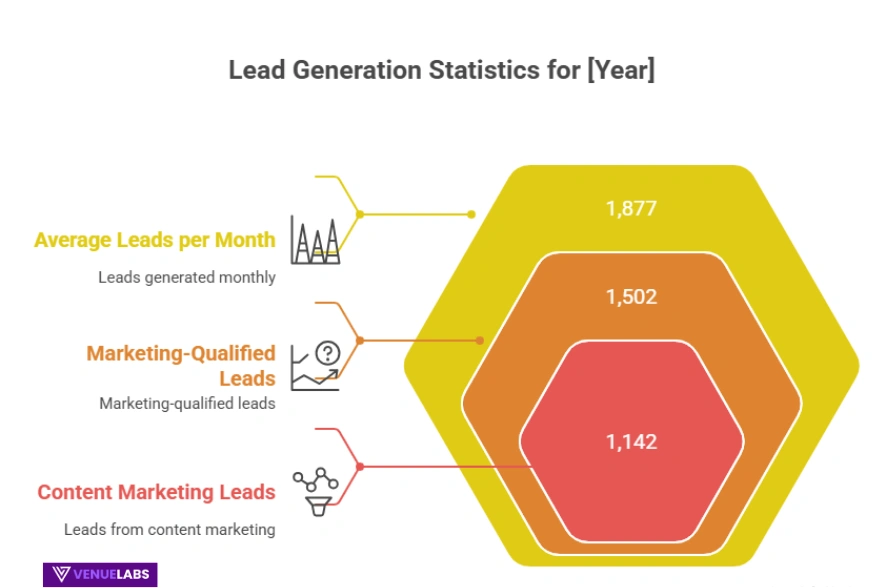
Let’s start with a quick overview of what’s happening in the world of lead generation. These highlights will give you a clear understanding of the current state and what to expect in the coming year.
| Statistic | Insight |
| Organizations generate 1,877 leads per month on average. | This shows the sheer volume of activity, but remember, quantity doesn’t always equal quality. |
| Over 91% of marketers consider lead generation their top priority. | This solidifies lead generation’s crucial role in marketing strategies. |
| Majority of mid-size and large companies generate less than 5,000 qualified leads each month. | Even large players face challenges in consistently generating high-quality leads. |
| Average cost per lead for B2B companies is around $200 across all industries. | Lead generation can be a significant investment, making efficiency and ROI critical. |
| 67% of marketers use content marketing for lead generation. | Content marketing is a proven powerhouse, generating 3x more leads than outbound marketing. |
| LinkedIn is the best platform for generating B2B leads. | For businesses targeting other businesses, LinkedIn remains an unrivaled channel. |
| 61% of marketers believe quality lead generation is their number one challenge. | A recurring theme: quality over quantity is a persistent struggle for many. |
| 80% of marketers believe marketing automation helps generate and convert large-scale sales. | Automation is key to scaling efforts and improving efficiency in lead management. |
| 53% of marketers spend more than 50% of their budget on lead generation. | This demonstrates the substantial financial commitment businesses make to attracting new customers. |
| Companies that post more than 15 blogs per month generate around 1,200 new leads each month on average. | Consistent, high-volume content creation directly correlates with increased lead volume. |
| 68% of companies have not identified their sales funnel. | A significant hurdle! Without a clear funnel, converting leads becomes a guessing game. |
| 50% of marketers focus on lead generation in their campaigns. | This shows a strong, but not universal, emphasis on lead generation as a core campaign objective. |
| The lead generation industry is projected to be worth $3.7 billion by 2027. | This highlights the continued growth and importance of the lead generation market. |
| 59% of leads are still in the consideration phase and not prepared to buy. | Patience and nurturing are crucial, as most leads aren’t immediately ready for purchase. |
| 22% of CEOs and CMOs cite lead generation as their top priority for the next 12 months. | This signifies the executive-level recognition of lead generation’s impact on business success. |
These statistics paint a vivid picture of the lead generation landscape.
They show that while it’s a top priority and a significant investment, it also presents considerable challenges, particularly in generating high-quality leads and clearly defining the conversion path.
Also read about: Content Marketing Statistics
General Lead Generation Strategies: What’s Working in 2026?
Let’s drill down into the everyday realities of lead generation.
What methods are marketers prioritizing, and what are the surprising facts you need to know?
- The Struggle is Real: 61% of marketers report that generating leads is their number one challenge. This isn’t just a minor hurdle; it’s a persistent problem that demands smart solutions.
- Budgeting for Growth: A significant 53% of marketers dedicate at least half of their budget to lead generation. This financial commitment underscores its importance. Furthermore, 58% of marketers plan to increase their lead generation budget in the coming years.
- Outbound vs. Inbound: Less than one-fifth of marketers believe that outbound practices (like cold calling) generate valuable leads. In contrast, inbound strategies, where potential customers find you, are gaining ground.
- The Power of Referrals: 78% of B2B marketers successfully use referral marketing. Happy customers telling others about your business is a potent, low-cost lead generation strategy.
- Automation is Your Ally: A staggering 80% of marketers agree that marketing automation brings more leads and conversions. Using tools to automate repetitive tasks like email sequences or social media posting can dramatically boost efficiency.
- Marketing automation software can help generate 451% more leads! This isn’t a small bump; it’s a monumental increase in efficiency and output.
- Speed is King: There are nine times more chances of leads converting when businesses follow up within 5 minutes. In our fast-paced world, quick responses are critical.
- The Size of the Prize: The majority of mid-size companies generate less than 5,000 qualified leads each month, suggesting that even established businesses continuously seek improvement in their lead quality.
- Channel Choices:
- 78% of companies use email marketing.
- 73% of companies use event marketing.
- 67% of companies use content marketing.
- Form Submissions & Live Chat: 84% of marketers use form submissions, a classic and effective method. Additionally, 33% of businesses use live chat to capture leads, offering immediate interaction.
- Cold Calling’s Diminishing Return: While 50% of businesses still use calls to generate leads, statistics reveal that 97% of people ignore cold calls. This means your sales team needs to be strategic and well-prepared if they use this method. Cold calling has a success rate of only 4.8%.
- Understanding Lead Types: Organizations report that 80% of their leads are marketing-qualified leads (MQLs). This means they’ve shown interest and fit your target audience profile but aren’t necessarily ready to buy.
Also read about: Marketing Automation Statistics
Deep Dive: Improving Lead Generation
What truly makes a difference in your lead generation process?
- Data Accuracy: 39.5% of marketers believe access to more accurate data could significantly improve their lead generation. Clean, reliable data helps you target the right people with the right message.
- Team Expansion: 36.6% of marketers think increasing team size would lead to more leads and effective marketing. More hands on deck, especially skilled ones, can make a big difference.
- Budget Increase: 35.1% of marketers believe a larger budget would improve marketing efforts and lead generation. While not always feasible, strategic investment often yields returns.
- Cost Per Lead (CPL):
- 9% of organizations pay $10 or less per lead.
- 4% spend $1,000 or more per lead.
- The average cost per lead for B2B companies across all industries is around $200. This wide range shows that CPL can vary wildly depending on industry, strategy, and lead quality.
Social Media: Your Lead Generation Powerhouse
With 5.17 billion people on social media, these platforms are goldmines for lead generation. But you need to know where to dig and how to extract that value.
- Efficiency Pays Off: 66% of marketers successfully generate leads by spending just six hours per week on social media marketing. This shows that consistent, focused effort can yield great results without consuming excessive time.
- Strong Leads from Social: 19% of marketers agree that social media can generate strong leads, debunking the myth that it’s only for brand awareness.
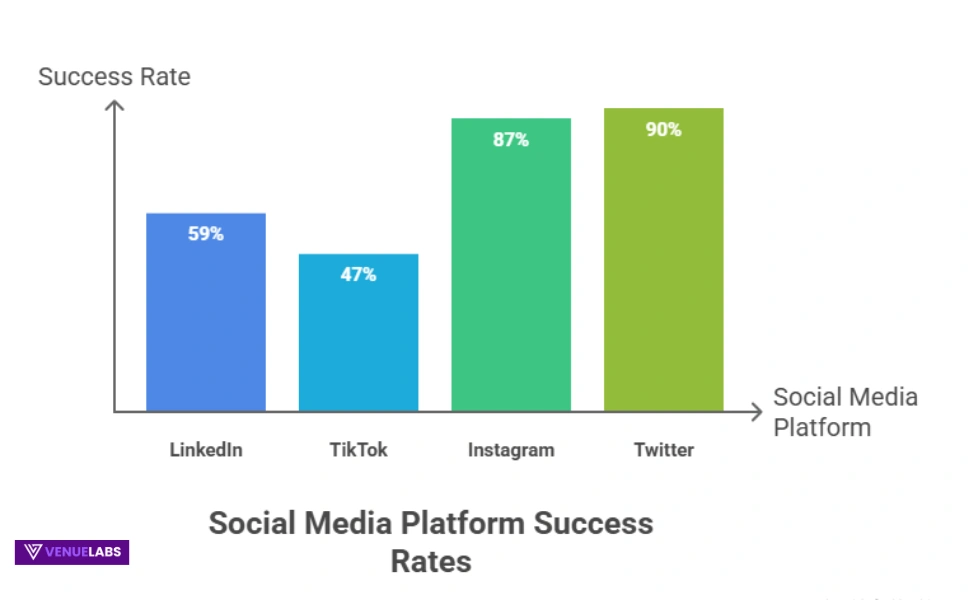
- Instagram’s Influence: 87% of consumers surveyed said they made a buying decision after seeing a product on Instagram. With over 2.3 billion users, Instagram is ideal for video ads targeting specific demographics, especially Gen Z and Gen Alpha.
- LinkedIn Reigns Supreme for B2B:LinkedIn is consistently reported as the most effective social media platform for generating B2B leads.
- 59% of marketers successfully generate customers through LinkedIn. This platform’s professional focus makes it perfect for connecting with decision-makers.
- Emerging Platforms: 47% of marketers are eager to learn more about TikTok for lead generation. Its massive reach and engagement, especially with younger audiences, make it an attractive new frontier.
- Content Preferences:
- 74% of social media users prefer to see 1 to 2 posts from brands they like and follow. Don’t overdo it!
- 51% of consumers like posts that highlight a brand’s products. Show off what you’re selling.
- Twitter’s Conversion Power: More than 90% of leads generated from Twitter are converted into sales. This is a powerful stat, suggesting that while Twitter might have a smaller user base than some, its engaged users are highly receptive to sales pitches.
Here’s a breakdown of social media platforms and their ideal usage for lead generation:
| Platform | Ideal Usage for Lead Generation |
| TikTok | Best overall, especially effective for Gen Z and Gen Alpha. |
| Ideal for an older, broader audience. | |
| Best for B2B lead generation. | |
| YouTube & Instagram | Best for video ads and visual content. |
| Pinterest & Quora | Higher chances for generating quality leads through niche interests and direct questions. |
Content Marketing: The Engine of Inbound Leads
Content marketing is not just about creating blog posts; it’s about providing value, building authority, and attracting leads naturally.
- Widespread Adoption: 80% of B2B companies plan to use content marketing to generate leads in the next 12 months.
- Cost-Effective: The cost of content marketing is 62% less than traditional marketing. You get more bang for your buck.
- Triple the Leads: Content marketing generates 3x the leads compared to outbound marketing, at less than 50% of the expense. This is a game-changer for budget-conscious businesses.
- Blogging Benefits:
- Marketers with blogs are 13 times more likely to drive a higher rate of leads.
- An effective blog drives 500% more traffic.
- B2B companies that blog generate 67% more leads than those that don’t.
- Companies that post 15 or more blogs per month generate approximately 1,200 new leads monthly on average. Consistency and volume are key.
- ROI from Content: Marketers who use blogging and content marketing generate 13 times more positive ROI.
- Measuring Success: 78% of businesses use website traffic to measure their content’s performance, while 75% can demonstrate the effect of content marketing on audience engagement.
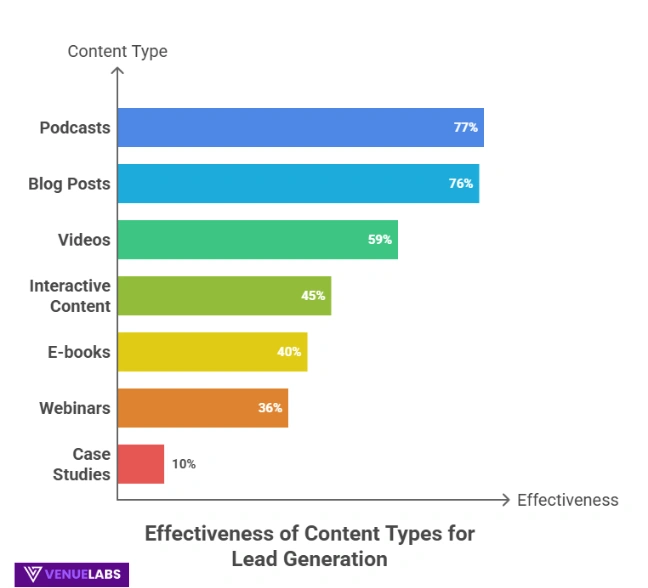
What content mediums are most effective?
| Content Medium | Effectiveness of the Content |
| Podcasts | 77% |
| Blog posts/articles | 76% |
| Videos | 59% |
| Interactive Content | 45% |
| E-books | 40% |
| Other types of content | 38% |
| Webinars | 36% |
| Events | 30% |
| White Papers | 26% |
| Case Studies | 10% |
Podcasts and blog posts are clear front-runners, highlighting the power of audio and written content for lead generation. Videos also hold significant weight, reflecting the growing trend of visual engagement.
Email Marketing: The Enduring Powerhouse
Despite the rise of social media, email marketing remains a cornerstone of lead generation and nurturing.
- Critical Factor: 42% of companies consider email a crucial lead generation factor.
- Demand Generation: 79% of B2B marketers find email marketing essential for demand generation.
- Incredible ROI: Businesses get a remarkable $36 in return for every $1 they spend on email marketing. This ROI is hard to beat!
- Optimal Send Times: Emails sent at 1 p.m. reportedly get the best results. Other suitable times are 8 a.m., 4 p.m., and 6 p.m. Test these for your audience!
- Effectiveness: 80% of marketers believe email is the most effective demand-generation tool.
- Compelling Content is Key: 56% of marketers believe providing leads with compelling content at each stage of the buyer’s journey is crucial for B2B email success.
- Downloadable Content: 49% of marketers find downloadable content (e.g., e-books, whitepapers) beneficial for converting leads at each stage of the buying process.
- Behavior-Based Campaigns: 45% of marketers believe that behavior-based email marketing campaigns (triggered by specific actions) are more beneficial.
- Engagement Rates:
- The overall open rate for marketing emails is 21.5%.
- Mondays have the highest email open rates at 22%.
- Click-to-open rates on Tuesday and Wednesday were 10.8%.
- Consumer Habits:
- 43% of online shoppers open branded emails at least once a day.
- 60% of consumers purchased at least one monthly product after reading a brand’s email. This demonstrates the direct impact of email on sales.
Diverse Marketing Channels for Lead Generation
Marketers are constantly exploring different avenues to find and engage potential customers.
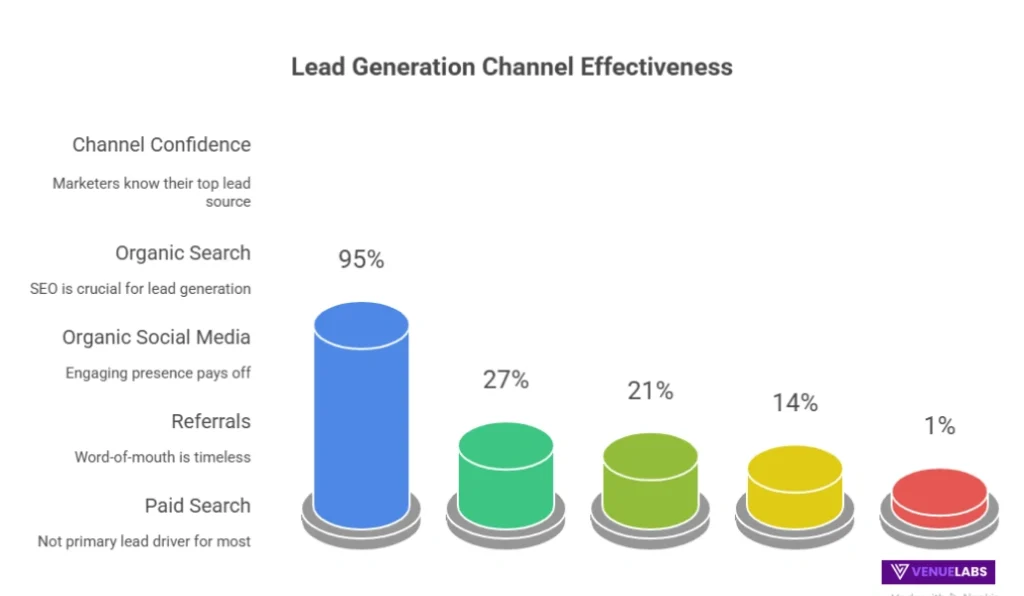
- Channel Confidence: 95% of marketers feel they know which channel generates most of their leads.
- Organic Search Dominance: 27% of marketers credit organic search with generating the most leads. Optimizing for search engines (SEO) is non-negotiable.
- Organic Social Media: 21% of businesses generate most leads through organic social media searches. Building a strong, engaging presence pays off.
- Referrals Still Strong: 14% of marketers believe referrals are the best medium to generate leads. Word-of-mouth is timeless.
- Paid Search’s Role: Only 1% of marketers believe paid search helps the most in generating maximum leads. While powerful for specific campaigns, it’s not the primary lead driver for most.
B2B Lead Generation: A Unique Landscape
B2B lead generation often requires a different approach due to longer sales cycles and multiple decision-makers.
- Strategic Landing Pages: 68% of B2B marketers use strategic landing pages to capture lead information.
- Events are Powerful: Events are consistently reported as most helpful in generating B2B market leads. In-person interactions build trust and connection.
- 65% of B2B companies consider in-person events the most effective lead generation tactic, followed by website marketing (55%) and email marketing (51%).
- The Cost of a B2B Lead: The average cost of generating a B2B sales lead is $132.
Here’s a look at the average Cost Per Lead (CPL) across various channels for B2B:
| Channel | Average Cost Per Lead |
| Events and Trade Shows | $881 |
| Public Relations | $294 |
| Referrals | $73 |
| Video Marketing | $174 |
| LinkedIn Advertising | $75 |
| Webinars | $72 |
| Display Advertising | $63 |
| Consumer Products | $105 |
| Content Marketing | $92 |
| Search Engine Ad | $110 |
| Social Media Ad | $58 |
| SEO | $31 |
| Email Marketing | $53 |
And CPL by Industry for B2B:
| Industry | Average Cost Per Lead |
| Technology | $208 |
| Healthcare | $162 |
| Finance | $160 |
| Manufacturing | $136 |
| Business Services | $132 |
| Travel & Tourism | $106 |
| Media & Publishing | $108 |
| Consumer Products | $105 |
| Marketing | $99 |
| Education | $55 |
| Telecom | $45 |
| Retail | $34 |
| Non-Profits | $31 |
These tables show that while some channels (like events) have a high CPL, they often yield high-quality leads. SEO and Email Marketing offer some of the lowest CPLs, making them highly efficient.
- SEO’s Impact: 59% of B2B marketers believe SEO has the biggest impact on lead generation.
- Marketing Qualified Leads (MQLs): 51% of B2B companies in the U.S. prioritize getting new MQLs into the pipeline. 30% call it mission-critical, showing the urgency.
- Increased Investment: 69% of B2B companies plan to increase investments in lead generation in the next 12 months.
- Paid Social’s Role: 65% of B2B businesses in the U.S. use paid social for lead generation.
- Email for B2B: 87% of B2B businesses rely on email for lead generation.
- Webinars for Leads: The goal behind 76% of webinars is to generate leads and sales.
- High-Performing Companies: Top-performing B2B companies have a 2.5 times higher lead generation rate for high-quality leads. This shows that optimization and strategic focus yield significant returns.
- Content as a Strategy: 74% of B2B marketers see content as the most effective strategy for generating leads and guiding them into the sales funnel.
Lead Conversion: Turning Prospects into Customers
Generating leads is only half the battle; converting them into paying customers is the ultimate goal.
- Satisfaction Levels: Only 12% of marketers are satisfied with their lead conversion skills. This indicates a significant area for improvement for most businesses.
- Longer Sales Cycles: 63% of leads who inquire about a business won’t be interested in converting into customers for at least three months. Patience and consistent nurturing are crucial.
- Video Content for Conversion: 70% of B2B marketers believe marketing video content helps convert leads.
- The Unconverted: You will not be able to convert 79% of leads into sales. This reinforces the need for a robust lead nurturing process.
- Conversion Rates by Industry:
- Professional Services have the highest conversion rate (9.2%) among all industries.
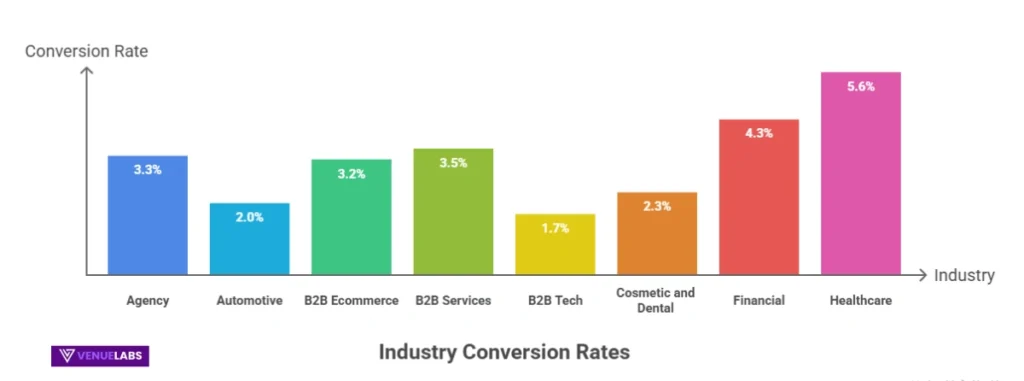
Here’s the data about conversion rates observed in different industries:
| Industry | Conversion Rate |
| Agency | 3.3% |
| Automotive | 2.0% |
| B2B Ecommerce | 3.2% |
| B2B Services | 3.5% |
| B2B Tech | 1.7% |
| Cosmetic and Dental | 2.3% |
| Financial | 4.3% |
| Healthcare | 5.6% |
| Industrial | 5.6% |
| Legal | 2.6% |
| Professional Services | 9.2% |
| Real Estate | 1.7% |
| Travel | 4.7% |
These conversion rates highlight industry-specific differences. While some industries naturally have higher conversion rates, the goal is always to optimize your process to improve yours.
Lead Nurturing: The Art of Cultivating Relationships
Once you have a lead, what’s next? Nurturing them! This means building a relationship, providing value, and guiding them toward a purchase.
- Increased Sales & Lower Costs:
- 20% more sales are generated through nurtured leads.
- Companies that nurture leads generate 50% more sales with 33% lower cost expenses. This is a powerful argument for investing in nurturing.
- Higher Value Purchases: 47% of larger purchases are made by nurtured leads compared to non-nurtured leads. Nurturing builds trust, leading to bigger commitments.
- Leads Not Ready: Almost two-thirds of leads are not ready to make a purchase immediately. This is why nurturing is so vital.
- Email for Nurturing: Email marketing used for lead nurturing has 8% higher CTRs and 4 to 10 times higher response rates.
- Nurturing Frequency: 22% of B2B companies nurture their leads weekly.
- Common Challenges in Nurturing:
- 41% of companies struggle to follow up with leads quickly.
- 44% of sales representatives are too busy to follow up with leads.
- 44% of sales representatives complain about poor handling of leads by the sales team.
These challenges highlight the need for clear processes, efficient tools, and good communication between marketing and sales to ensure leads are nurtured effectively.
Challenges in Lead Generation: Overcoming Obstacles
Understanding the difficulties helps you prepare and strategize.
- Resource Constraints: Lack of resources, improper budgeting, and insufficient staff are the biggest barriers to lead generation, according to 40% of marketers.
- Measuring Conversions: One-fourth of marketers struggle to calculate the conversion rates of generated leads. If you can’t measure it, you can’t improve it.
- Quality Over Quantity: 61% of marketers see generating high-quality leads (those more likely to convert) as their biggest challenge.
- Undefined Funnels: 68% of B2B businesses cannot properly identify their sales funnel. This is a critical gap that leads to lost opportunities.
- Lack of Nurturing Process: 65% of B2B businesses lack a proper lead nurturing process. Without it, valuable leads slip away.
- Tracking Offline Conversions: 31% of marketers find tracking offline conversions (e.g., from events or phone calls) a great challenge.
- Proving ROI: 31% of marketers find proving ROI among their biggest challenges while generating leads.
These statistics underscore the need for better planning, clear funnel definitions, proper tools, and robust analytics to overcome common lead generation obstacles.
Emerging Trends in Lead Generation (2026 & Beyond)
To truly stay ahead, you need to understand where lead generation is heading.
- Landing Page Lead Qualification: Optimize your landing pages with simple forms to capture lead information effectively. This is where interest translates into a tangible lead.
- Marketing Automation: This isn’t just a trend; it’s a necessity. Automating tasks like lead nurturing, email marketing, and social media posting saves time and improves consistency.
- Featured Snippets Optimization: Strive to have your content appear in Google’s “Featured Snippets.” This prime real estate at the top of search results can drive significant organic traffic and leads by directly answering user queries.
- Hyper-Personalization: Generic messages are out. Tailoring your marketing messages to individual preferences and behaviors will become even more crucial for lead generation and conversion.
- Community-Based Marketing: Engaging with online communities (forums, niche social groups, Reddit, Quora) where your target audience congregates can yield highly qualified leads. Answering questions and providing value builds trust and positions you as an expert.
- Google Advertising’s Continued Role: Google Ads will remain a powerful tool for capturing intent-driven leads, especially for those actively searching for solutions.
What Users Are Asking on Quora and Reddit (Latest Insights)
Beyond the traditional statistics, looking at user-generated content platforms like Quora and Reddit provides real-time insights into what potential leads are asking and struggling with. This is where you find the “missing piece” that statistics might not explicitly state.
Here’s what users are frequently discussing:
- “How do I identify? Many users are frustrated by a high volume of leads that never convert. This reinforces the 61% statistic about the challenge of generating high-quality leads and suggests a need for better lead scoring and qualification methods.
- “What’s the best way to get leads without cold calling?” This aligns with the statistic showing 97% of people ignore cold calls and the low effectiveness of outbound practices. Users are actively seeking inbound, less intrusive methods.
- “My leads stop responding after the first contact. What am I doing wrong?” This speaks directly to the challenges in lead nurturing (41% struggle to follow up quickly) and the need for more effective, value-driven follow-up sequences. Users are implicitly asking for better lead nurturing strategies and content.
- “How can I use AI to find leads?” This points to a growing interest in marketing automation and the application of AI, aligning with the 25% of marketing professionals citing lead generation and qualification as the most effective AI applications. People are looking for smarter, more efficient tools.
- “What kind of content actually generates leads, not just traffic?” This goes beyond basic content marketing stats and delves into the effectiveness of content mediums (podcasts, blogs, videos), suggesting a desire for practical advice on creating conversion-focused content.
These real-world questions from potential leads provide invaluable context. They tell us that people want:
- Quality over quantity.
- Inbound and permission-based strategies.
- Effective lead nurturing.
- Leveraging new technologies like AI.
- Content that directly drives conversions.
By addressing these user concerns in your lead generation strategies, you can build a more human-centered and effective approach.
FAQs About Lead Generation Statistics
1. What is the biggest challenge marketers face in lead generation in 2026?
Generating high-quality leads that are likely to convert is the biggest challenge, cited by 61% of marketers.
2. Which marketing channel is most effective for B2B lead generation?
LinkedIn is the most effective B2B lead generation platform, with 59% success, alongside high-performing in-person events.
3. How important is lead nurturing, and what are its benefits?
Lead nurturing boosts results by generating 20% more sales at 33% lower cost than non-nurtured leads.
4. What role does content marketing play in generating leads?
Content marketing generates 3× more leads than outbound marketing at less than half the cost.
5. What trends should businesses focus on for lead generation in 2026?
Focus on better landing pages, marketing automation, featured snippets, personalization, and community marketing.
Also Read:
- Internet User Statistics
- Google Ads Statistics
- PayPal Statistics
- Digital Marketing Statistics
- WhatsApp Statistics
Conclusion: Lead Generation Is The Top Priority For 85% Of Companies
Lead generation remains an absolute top priority for marketers and businesses looking to thrive in 2026 and beyond. With 91% of marketers considering it their primary focus, the competitive landscape demands a sophisticated approach.
While challenges persist – notably, 61% struggling to generate quality leads and 79% of leads never converting – the opportunities for those who adapt are immense.
The data clearly shows that content marketing is a phenomenal tool, generating 3x more leads than outbound efforts at a fraction of the cost.
Email marketing continues to deliver an impressive $36 return for every $1 spent, making it an undeniable workhorse. For B2B businesses, LinkedIn stands out as an unrivaled platform, and events offer high-value connections.
To succeed, businesses must embrace personalization, leverage marketing automation, and commit to robust lead nurturing processes.
By understanding these Lead Generation Statistics 2026 and actively addressing the pain points highlighted by real users on platforms like Quora and Reddit, companies can move beyond mere lead generation to true lead transformation.
Overcoming obstacles like unclear sales funnels and insufficient follow-up will pave the way for sustained growth and a continuous stream of engaged, high-quality customers.
Source: Statista, Exploding Topics



Comments
Be the first to leave a comment.