

Virtual Reality (VR) is no longer just a concept from science fiction — it’s now a powerful tool transforming how we live, learn, work, and play.
In 2026, VR is seeing massive global adoption and innovation, creating exciting opportunities for businesses and individuals alike.
Whether you’re an entrepreneur, educator, developer, or curious user, understanding VR trends and statistics is key to tapping into its full potential.
Virtual Reality Statistics: At a Glance
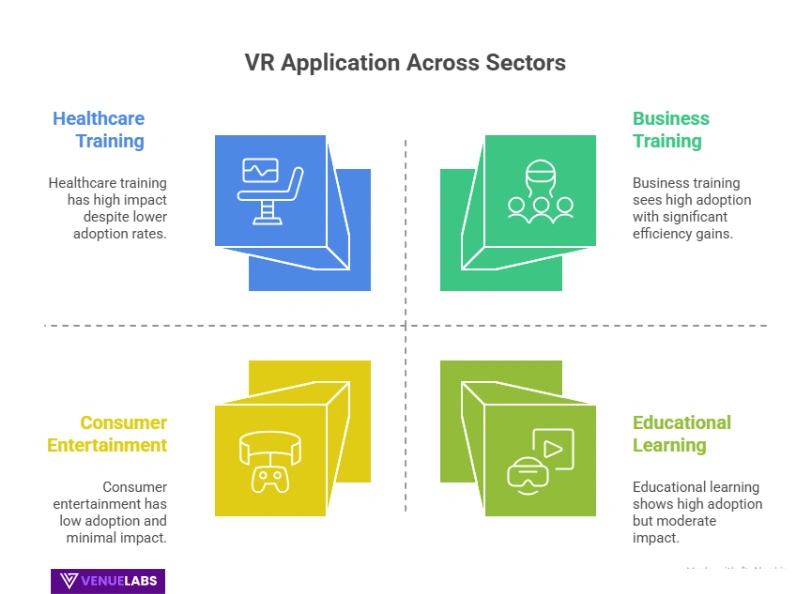
Here are some quick stats that show how fast VR is growing this year:
- 171+ million people use VR worldwide
- 77 million users are in the U.S. alone
- 216 million users globally.
- 52.8% global penetration rate of AR/VR expected
- VR market size reaches $67.66 billion in 2025
- By 2030, VR could boost the global economy by $450.5 billion
- 91% of businesses are using or planning to use VR/AR
- 75% of Fortune 500 companies have adopted VR in some form
- Over 50% of universities will offer VR-based courses
- 69% of healthcare leaders plan to invest in VR for training and patient care
Also read about: Screen Time Statistics
Who’s Using VR?
- Global Users: Over 171 million people already use VR, with a projected jump to 216 million by the end of 2026.
- In the U.S.: VR user growth continues steadily, from 43.4M in 2019 to a projected 91.3M by 2028.
- Penetration Rate: AR/VR will reach 52.8% of the population by 2026.
How Businesses Use VR
- 51% of companies are integrating VR into daily operations.
- 91% plan to adopt or have already adopted VR/AR.
- Top uses include:
- Virtual labor support (60%)
- Virtual customer visits (53%)
- Product design and engineering (53%)
- Employee training (26%)
Also read about: Videogame Industry Statistics
Most Popular VR Devices
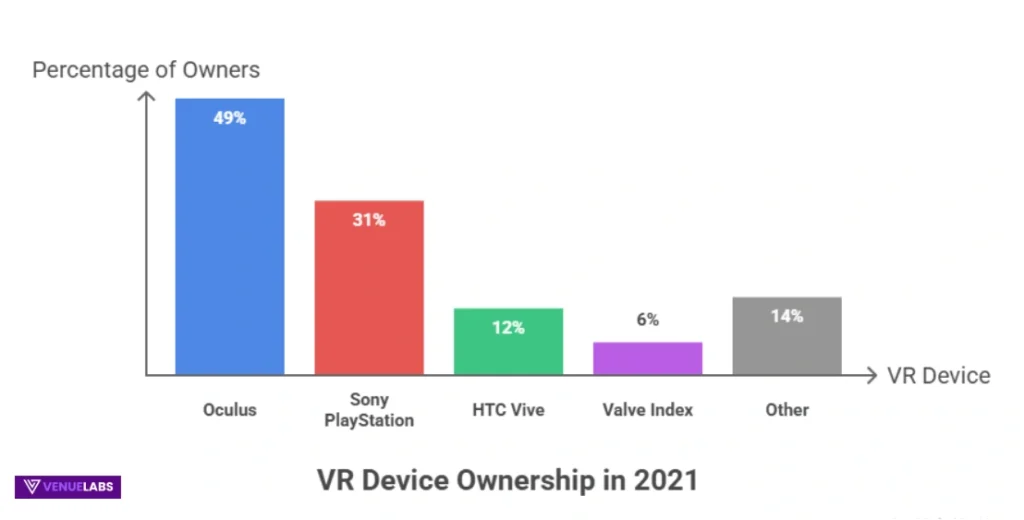
- Oculus (Meta): 49% of global users
- Sony PlayStation VR: 31%
- HTC Vive & Valve Index: Smaller shares
- Oculus Quest 2 is popular among gamers
Market Value and Revenue Growth
| Year | Global VR Market Value |
|---|---|
| 2023 | $54.24B |
| 2025 | $67.66B |
| 2029* | $204.35B (projected) |
- VR Headsets: Revenue will hit $9.9B in 2024, rising to $11.4B by 2028.
- Asia-Pacific is the fastest-growing region, while North America leads in total market size.
Also read about: Metaverse Statistics
VR in Gaming and Beyond
- 70% use VR for gaming
- 42% use it to watch shows/movies
- The VR gaming market will grow to $105.5B by 2030
- Gamers want more than games:
- Virtual travel
- Social experiences
- Live in-game events
- Educational classes
VR in Education and Training
- 75% retention rate with VR vs. 5–20% with traditional learning
- 8.8% boost in memory recall with VR
- Training time is reduced:
- Classroom: 2 hours
- E-learning: 45 mins
- VR: 29 mins
- VR-trained employees are more confident and focused
- Healthcare Impact:
- 50% fewer surgical errors with VR training
- 34x more cost-effective than traditional training
The Future Is Virtual: Trends Shaping VR in 2026
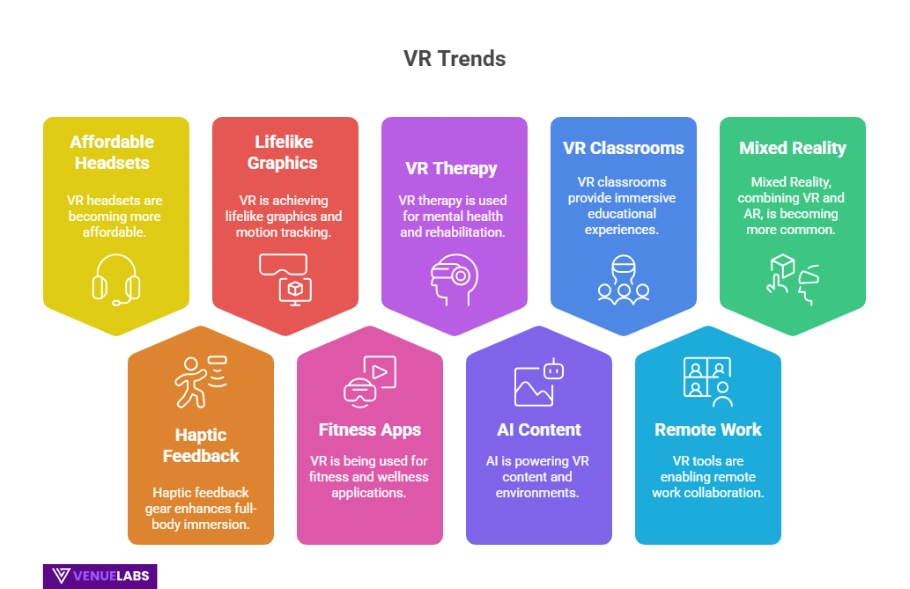
Top trends include:
- Affordable VR headsets (e.g., Meta Quest 3, Pico 5)
- Haptic feedback gear for full-body immersion
- Lifelike graphics and motion tracking
- Fitness & wellness apps using VR
- VR therapy for mental health, rehab, and phobias
- AI-powered content, environments, and avatars
- VR classrooms for immersive education
- Remote work tools with VR collaboration
- Mixed Reality (VR + AR) becoming more common
Industries Being Transformed by VR
- Healthcare: VR-assisted surgeries, pain relief, and mental health treatments
- Education: Virtual labs, interactive simulations, higher engagement
- Gaming & Entertainment: Leading VR adoption with immersive experiences
- Retail: Virtual try-ons and product demos
- Travel: Virtual tourism and destination marketing
- Real Estate: Virtual property walkthroughs
- Manufacturing & Logistics: Training, planning, and simulations
- Military & Defense: Combat and equipment training without risk
Real Questions from Real Users (via Quora & Reddit)
- “Is VR just for gaming?”
→ No. It’s used in education, healthcare, training, and more. - “Which VR headset is best on a budget?”
→ Devices like Meta Quest 2/3 offer affordable entry points. - “Can VR help me learn or train?”
→ Absolutely, it improves retention and speeds up training. - “Will VR feel more real in the future?”
→ Yes, with haptics, AI, and better visuals, it’s becoming more immersive. - “Is VR safe for frequent use?”
→ Generally safe, but like any screen time, moderation is key.
FAQs About Virtual Reality Statistics
1. How many people currently use Virtual Reality worldwide in 2026?
In 2026, over 171 million people globally use VR technology, and this number is expected to grow significantly, reaching an estimated 216 million active users by the end of the year.
2. What is the projected market size for Virtual Reality in 2026?
The Virtual Reality market size is estimated to be valued at $67.66 billion in 2026, with projections indicating it will reach $204.35 billion by 2029, demonstrating robust growth.
3. How does VR impact education and training compared to traditional methods?
VR significantly improves education and training by offering a 75% retention rate in schools (compared to 5-20% for other methods), enhancing memory recall by 8.8%, and allowing employees to be trained up to four times quicker than through traditional classroom methods.
4. Which industries are leading the adoption of Virtual Reality technology in 2026?
In 2026, industries leading the adoption of VR include gaming and entertainment, healthcare (with 69% of decision-makers planning investment), education and training (nearly half of universities offering VR courses), and the enterprise sector (over 75% of Fortune 500 companies implementing VR).
5. What are the most significant emerging trends shaping the future of VR in 2026?
The most significant emerging trends in 2026 include more affordable standalone VR hardware, advanced multi-sensory technologies like haptic feedback, ultra-realistic graphics, the booming VR fitness and wellness market, deeper AI integration for dynamic experiences, and the convergence of AR and VR into mixed reality.
Also Read:
- Voice Search Statistics
- Chatbots Statistics
- YouTube Statistics
- Android Statistics
- Marketing Automation Statistics
Final Thoughts: VR Is Here to Stay
With over 171 million global users and growing, VR has officially gone mainstream. Businesses, schools, and hospitals are embracing its potential and not just for entertainment, but for real-world impact.
As we move toward 216 million users by the end of 2026, the momentum is unstoppable.
Whether you’re a business leader, educator, or tech enthusiast, now is the time to explore VR’s capabilities. With better hardware, smarter software, and growing adoption, the future is not only digital — it’s immersive.
Source: Statista, Fortune Business Insight



Comments
Be the first to leave a comment.