
OpenAI has updated the official description of its web crawler, OAI-SearchBot, the tool used to collect information for ChatGPT.
The company has changed key details about how the crawler works and what it is allowed to do.
These updates have already caught the attention of SEO experts and web analysts.
The changes indicate that OpenAI is refining the roles of its different bots and adjusting how they interact with websites.
ChatGPT Crawler: What OpenAI Changed in the Crawler Description
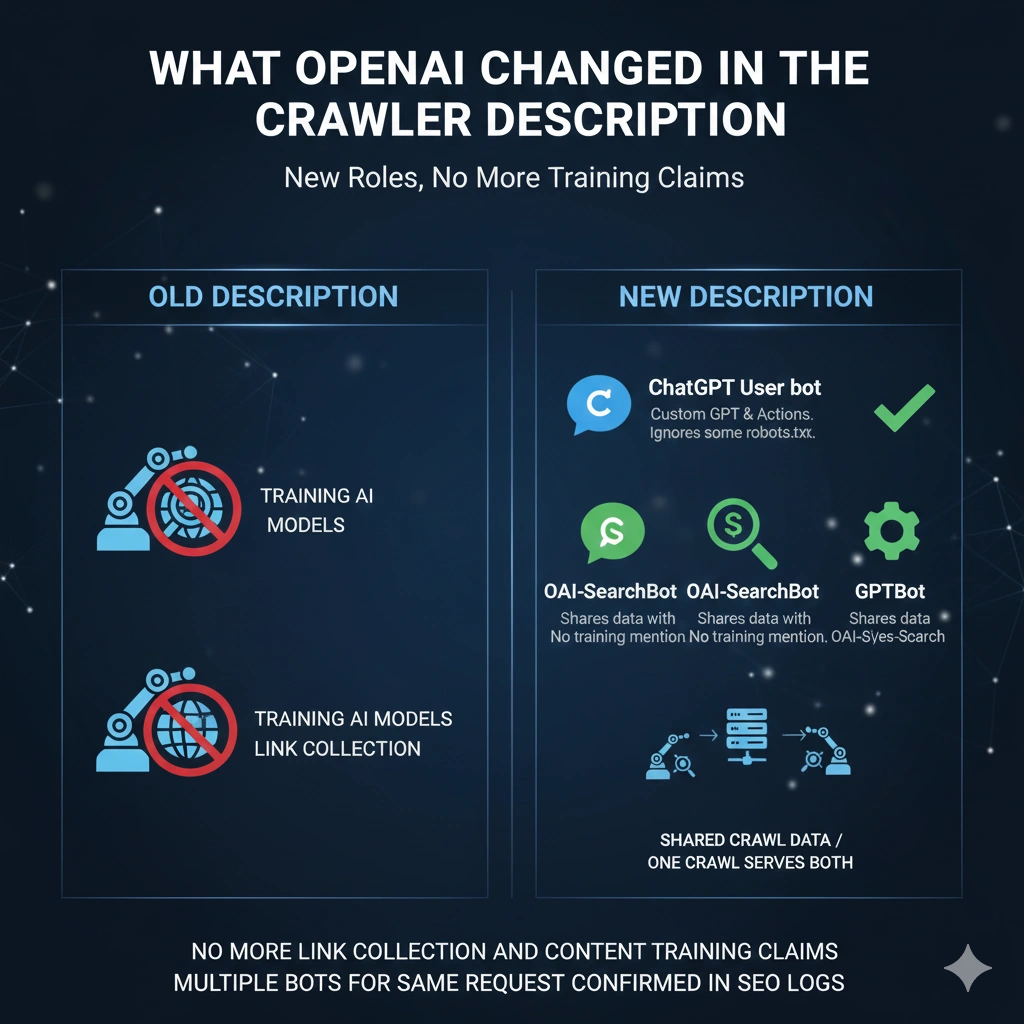
The new description removes references to link collection and content training for foundation models. It also adds new roles for other OpenAI bots.
Key Updates Noted:
- OAI-SearchBot no longer mentions training AI models
- ChatGPT User bot may not follow robots.txt rules fully
- OAI-SearchBot may not control links shown in ChatGPT answers
- ChatGPT User bot now handles Custom GPT and GPT Actions
- OAI-SearchBot and GPTBot now share crawl data
- One crawl may serve both bots if both are allowed
SEO logs show multiple OpenAI bots visiting websites for the same request, which supports the updated explanation.
Also read about: ChatGPT Ads 2025: OpenAI’s Next Game-Changer for Marketing
Why These Crawler Changes Matter
These updates affect how website owners manage OpenAI’s crawlers. The shift in robot behavior may change how content appears in ChatGPT results.
Impact on Website Owners:
- Blocking OAI-SearchBot will not stop links from appearing in ChatGPT
- GPTBot and OAI-SearchBot may reduce duplicate crawling
- robots.txt rules may not apply fully to all OpenAI bots
- Site logs may show more overlap between OpenAI crawlers
- Custom GPT features may rely more on the ChatGPT User bot
Analysts say this update could mean OpenAI wants more flexibility in how ChatGPT gathers information. Some also believe OpenAI is separating model-training crawls from user-action crawls to avoid confusion.
Pieter Serraris, who spotted the update, said the new wording signals “big changes” in how OpenAI wants its bots to operate across the web.
Also Read:
