
edX and Coursera are the two largest MOOC platforms in online education. Both launched in 2012. edX was founded by MIT and Harvard, while Coursera was started by two Stanford professors.
Each platform offers university level courses through recorded video lectures, quizzes, and graded assignments. Complete a course and you can pay for a digital certificate. Both also offer free auditing, which gives you access to the learning material without the certificate.
The difference lies in focus. edX partners with over 160 universities and leans academic, with programs like MicroMasters that carry graduate credit. Coursera works with over 200 universities and companies, including Google and IBM, and centres on job ready Professional Certificates.
This comparison covers pricing, certificate types, course formats, instructors, content quality, and affiliations for both platforms. Prices and program details change regularly, so verify current figures on each site before enrolling.
edX vs Coursera 2026: A Complete Comparison
Choosing between edX and Coursera is one of the most common questions in online learning. Both are MOOC platforms, meaning massive open online courses that anyone can enrol in over the web.
Both started in 2012. MIT and Harvard built edX as a nonprofit. Two Stanford professors founded Coursera. Today they are the two biggest names in the space.
The format is similar on both. You watch recorded lectures, take quizzes, submit assignments, and pay for a certificate if you want proof of completion. Free auditing is available on each, which unlocks the course material without the graded work or credential.
Where they split is purpose. edX works with more than 160 universities and stays close to traditional academics, offering MicroMasters programs that can count toward a real degree. Coursera partners with over 200 universities and companies, including Google and IBM, and builds much of its catalogue around career focused Professional Certificates.
Below we compare pricing, certificate options, course formats, instructors, content quality, and university affiliations. Both platforms update their prices and programs often, so check the current details on their sites before you enrol.
edx vs Coursera: What is a MOOC Platform?
It is an online course that aims to provide open access and unlimited participation through the web, similar to edX or Coursera.
A MOOC usually incorporates access to online resources and social networking, which experts lead in the field.
It is important to emphasize that MOOCs rely on learners’ engagement, who self-organize their participation according to their common interests, prior knowledge and skills, and learning goals.
MOOC platforms such as edX and Coursera are quite popular today. Below is a comparison of Edx vs Coursera, which are two platforms.
edx vs Coursera: Overview
What Is edX?
edX is an online learning platform founded in 2012 by MIT and Harvard, two of the most respected institutions in the world. It started as a nonprofit with a simple goal: make university level education available to anyone with an internet connection.
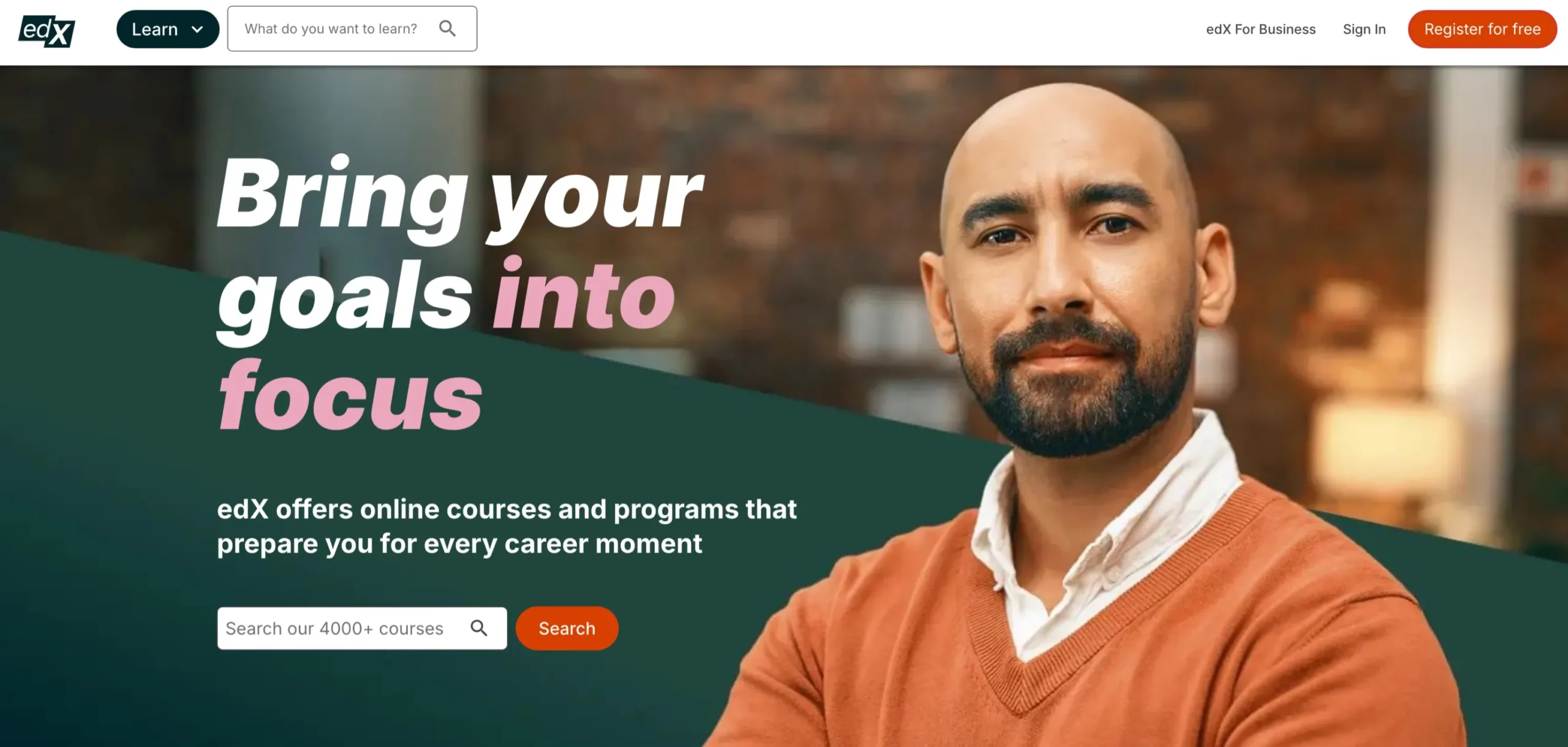
You browse the catalogue, pick a subject that interests you, and enrol. Courses come directly from partner universities and are taught by their own faculty.
The range is wide. You will find everything from computer science and engineering to philosophy, business, and public health. Most courses can be audited free, so you can explore a subject before spending anything.
For learners, edX serves two purposes. It helps you build practical skills for your career, and it lets you test a field before committing to a full degree.
What Is Coursera?
Coursera is an online learning platform launched in 2012 by two Stanford professors. Its focus sits closer to career outcomes than pure academics, which shapes most of what you find in the catalogue.
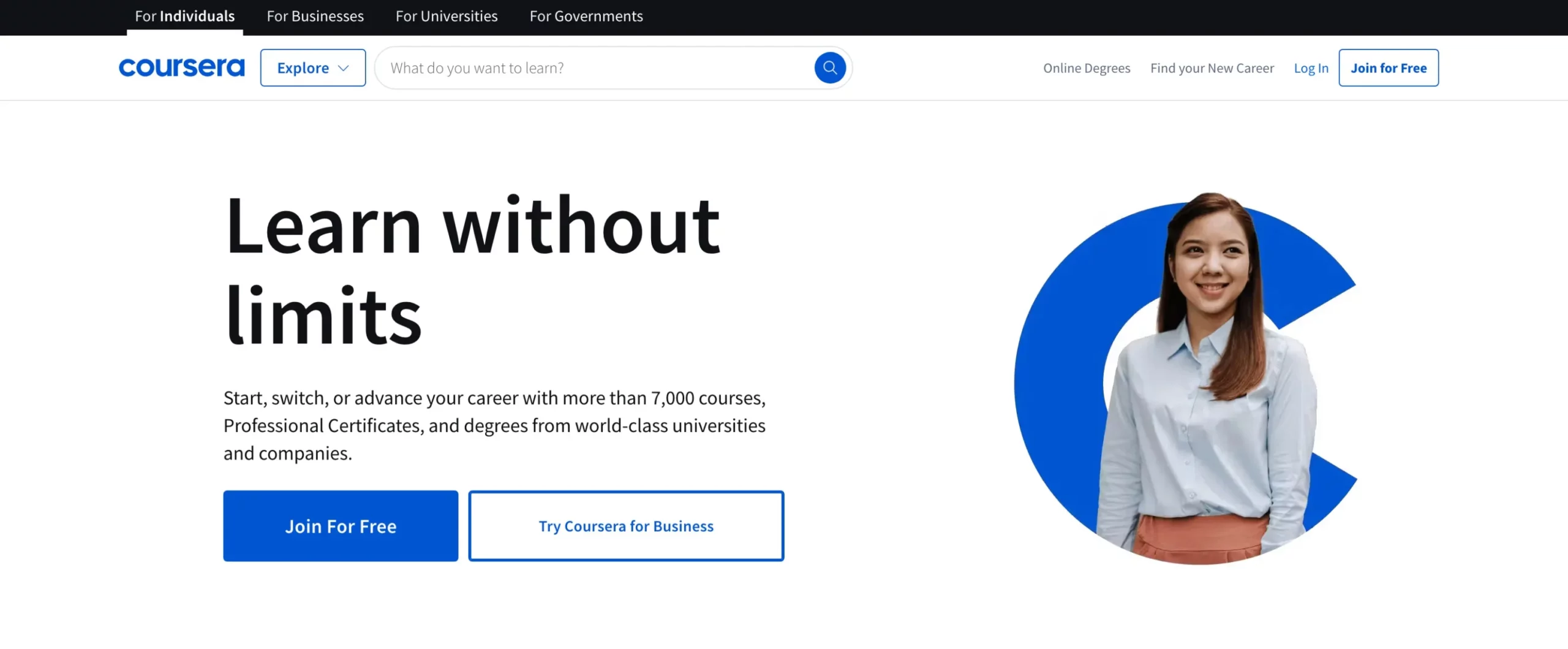
Signing up is free and takes a minute. You can create an account with your email, or log in with Google or Apple.
At first the Coursera MOOC platform appears like any other E-learning platform, but it has plenty of impressive features that we will reveal in due course.
. The depth shows once you explore the formats, which include single courses, Specializations, Professional Certificates, and full degrees.
Coursera partners with more than 200 universities and companies, including Yale, Duke, IBM, and Google. That mix is its strongest feature, since you get academic courses and industry built credentials in one place.
EdX vs Coursera: Pricing
Let’s take a deep look at the pricing of both platforms.
EdX Price Plans
Certificate holders (the verified track) will be charged (usually between $50 and $359). EdX offers free courses you can audit, but if you’re interested in earning a certificate (the verified track), you will be charged.
In addition to lifetime access to course materials, you can also take courses on verified tracks. Furthermore, edX offers courses at the graduate level through its MicroMasters program.
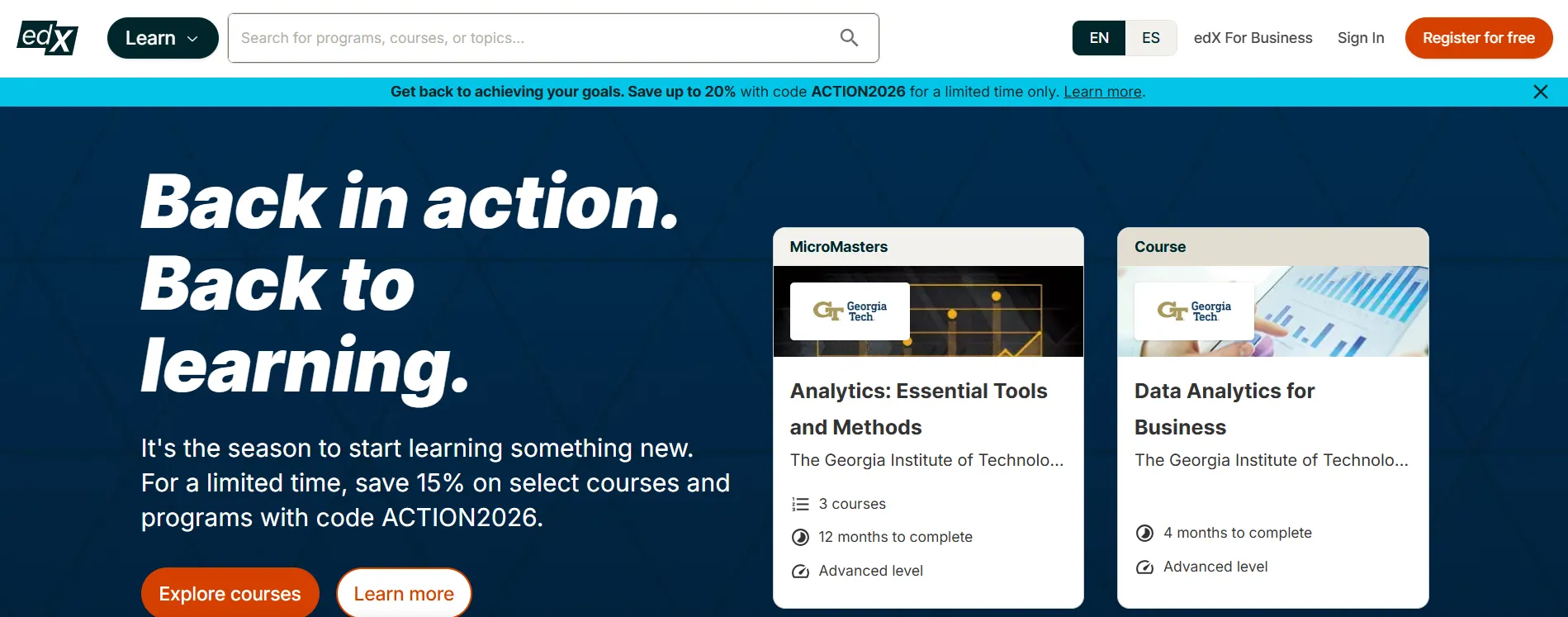
You can advance in your career by taking advantage of each package of the program. Universities teach the classes, so you may qualify for a Master’s degree program with the credits you earn.
Various packages are available. The MicroBachelor’s program is for those who have yet to complete their undergraduate degree.
One-time payments are required for EdX’s offerings. The cost of enrolling can be defrayed if you apply for financial aid.
Those who aren’t satisfied with a verified track purchase can request a refund within 14 days of the sale date or 14 days after the course start, whichever is later. If you have earned a certificate, you cannot get a refund.
Coursera Price Plans
The following courses are available at varying price points on Coursera:
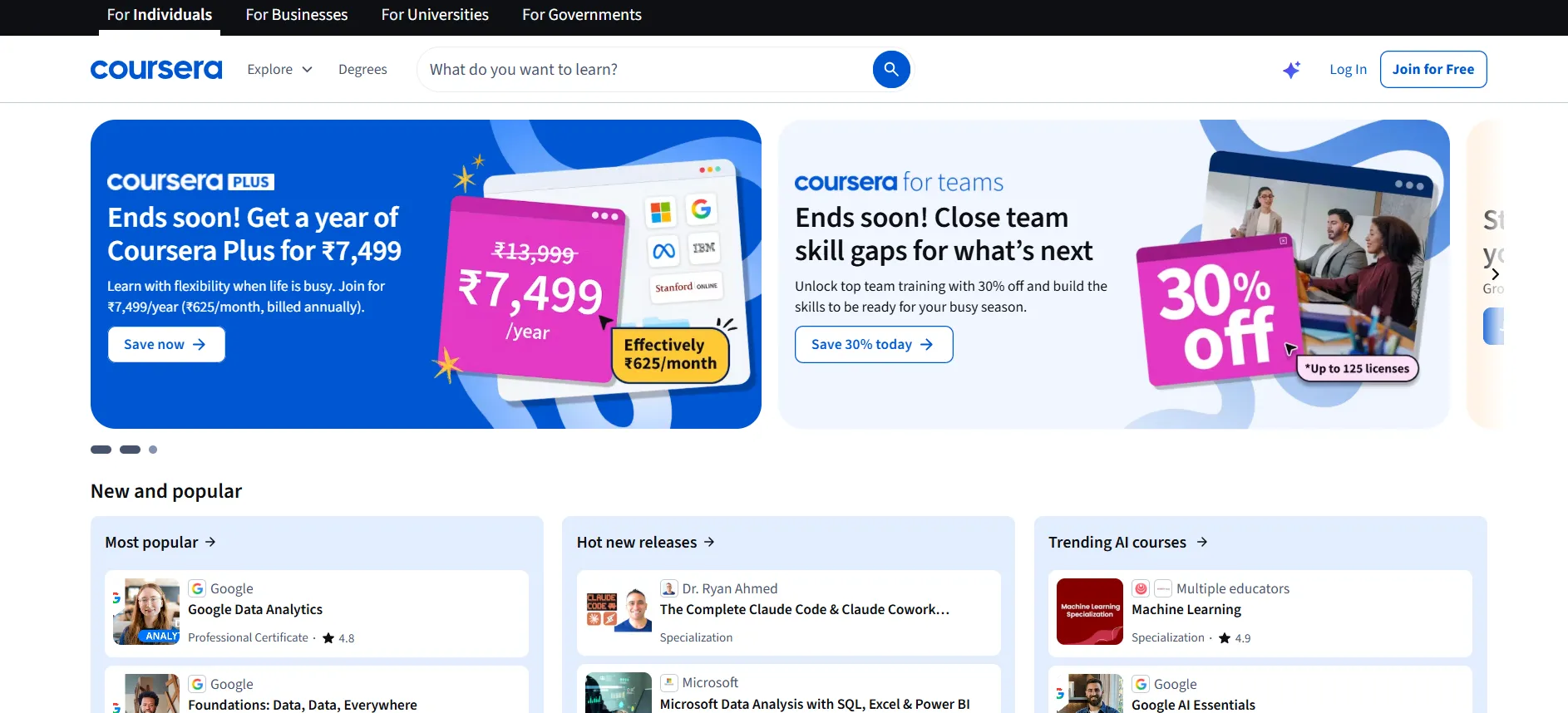
In addition to Coursera, Coursera Plus is also available. Three options are available:
From $49.00 – $79.00 per month, access to one course or specialization
For $59 per month, you can access a broader course catalog
For $399 per year, you can access a broader team plan
edX offers some course materials for free, and certificates of completion are available for some free courses.
If you cannot afford to register for a paid learning opportunity, you may be able to get financial aid to help cover tuition. Promotional discounts may also be available.
From the drop-down menu next to your picture, select “Promotions” (under “My Purchases”) to find out if there are any cost-saving opportunities.
Individually purchased Coursera courses may not be accessible for life. According to the company, a specialization subscription can only be accessed if there is an active subscription.
Coursera has different refund policies depending on which learning product you purchase. You can usually request a refund within two weeks of your purchase.
In any case, Guided Project purchases cannot be refunded or subscriptions may not be partially refunded. Before you buy the product, it’s a good idea to review the product’s specific refund policy details.
edX vs Coursera: Features Comparison
Now let’s look at how both platforms perform across the areas that matter most: usability, content quality, certificates, and features.
1. Ease of Use
A learning platform is only useful if you can find what you need without friction. Here is how each one handles it.
Coursera
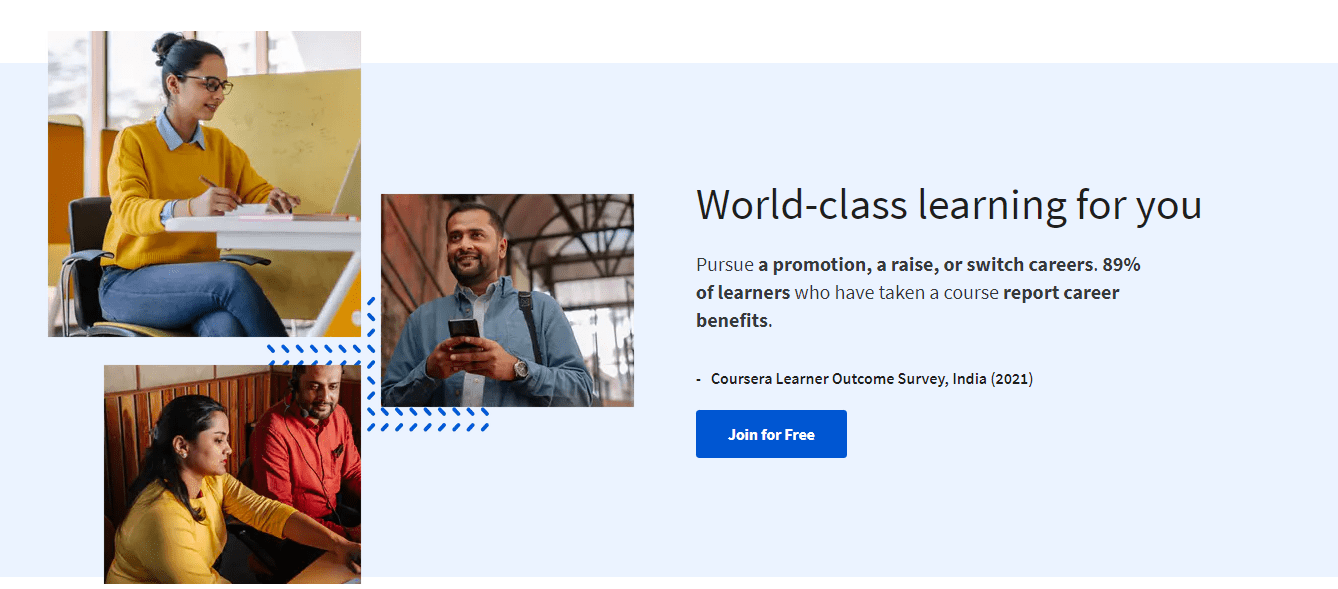
Coursera keeps things simple. Log in and you land on a clean dashboard that explains what the platform does and shows its partner institutions.
Navigation runs through drop down menus. You filter by subject, then by institution, and the results narrow quickly. Payment options are flexible, with subscriptions, single purchases, and financial aid all available.
Learners generally rate the experience well. Course pages are organised in a consistent layout, so once you finish one course you already know how the next one works.
edX
edX takes a more academic approach to design. Several users describe the first impression as visiting a university website, which is fair, and it matches what the platform actually offers.
The layout feels formal and structured rather than consumer friendly. Course pages list prerequisites, time commitment, and syllabus details upfront.
Search and filtering work well, and most people find the course they want without hunting.
Verdict: Coursera is smoother for beginners. edX feels more like a university catalogue, which suits learners who want detail before enrolling.
2. Quality of Content
Content quality decides whether you finish a course or abandon it in week two. Here is how the two compare.
Coursera
Coursera scores well here, and the reason is simple. Its courses come from partner universities and are built by the professors who teach them on campus.
Many of those instructors have spent entire careers researching their field. That depth shows in how the material is structured and explained. Reviews across the platform back this up, with most learners rating the course content as solid and well organised.
The industry courses hold up too. Google and IBM built their Professional Certificates around the skills they actually hire for, which keeps the material practical.
edX
edX runs as a nonprofit and its academic standards are high. Most learners describe the content as detailed, resourceful, and genuinely satisfying to work through.
Feedback is more mixed though. Some users report technical problems, including iOS app crashes. Others feel certain courses feel thinner than expected for the price. Quality tends to vary course by course rather than across the whole platform.
Winner: Coursera, mainly for consistency. edX has excellent courses, but you need to check reviews before enrolling.
3. Certificates Offered
Both platforms issue digital certificates when you complete a paid course. The difference is in how many types they offer and what each one signals to an employer.
Coursera Certificates
Coursera has the wider range, and the options break down by goal.
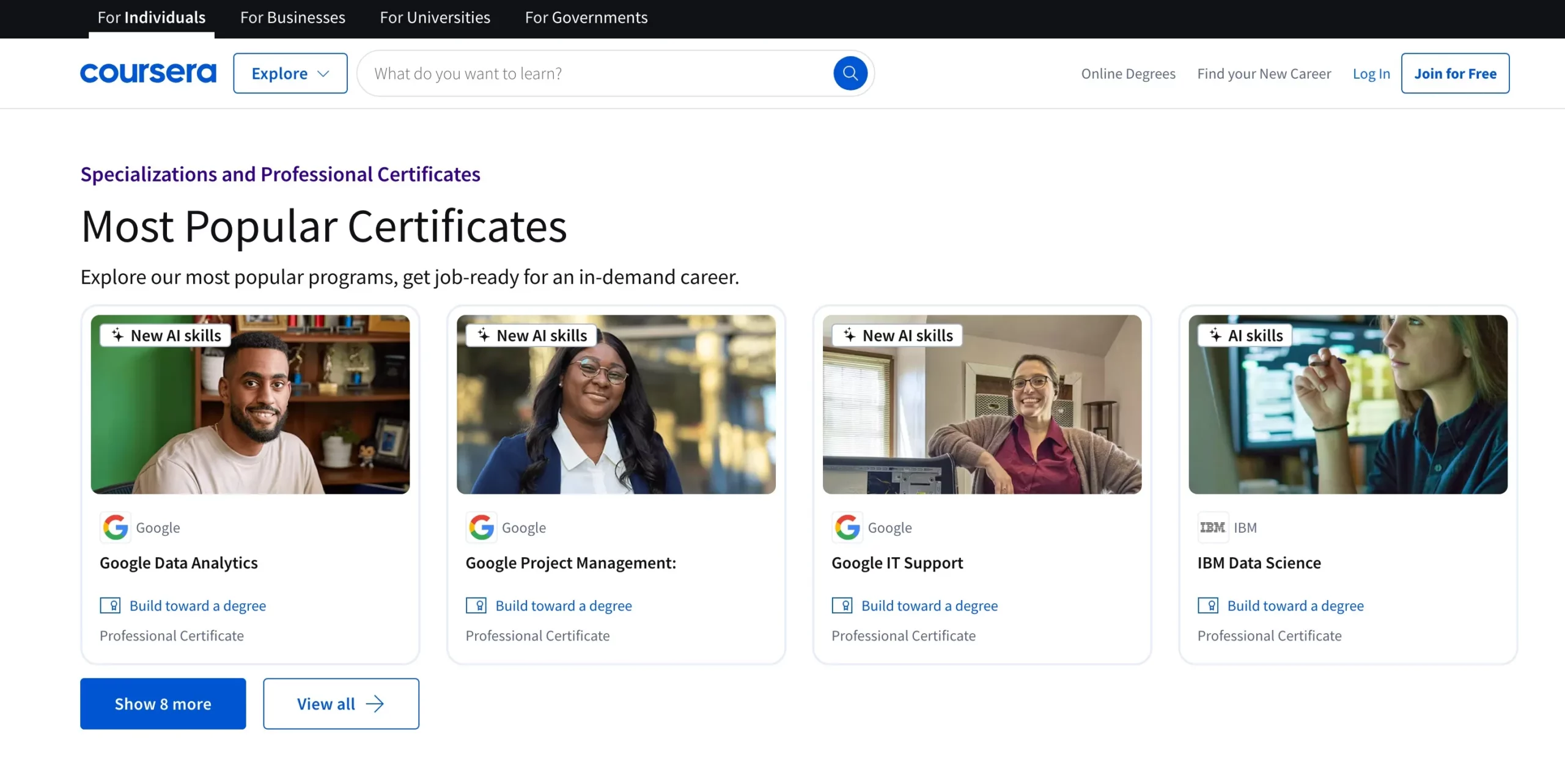
Professional Certificates are the flagship. These are built with companies and aimed at job entry, including Google IT Support, Google IT Automation with Python, Google Cloud Architecture, Google Cloud Data Engineering, IBM Data Science, IBM Applied AI, IBM Cybersecurity Analyst, and Mainframe Practitioner for IBM z/OS.
Professional certificates.
Google IT Support.
MasterTrack certificates.
Google Cloud architecture.
IBM Data Science.
Google Cloud data engineering.
IBM applied AI.
Google IT automation with Python.
IBM cybersecurity analyst.
Instructional design certificate.
Mainframe practitioner for IBM z/OS.
Project management at UCI.
Construction management and engineering certificate.
Machine learning for Analytics certificate.
Big data certificate.
Social work certificate.
Innovation management & entrepreneurship certificate.
AI and Machine learning certificate.
Certification for sustainability and development.
Spatial data analysis and visualization certificate.
University certificates cover more academic and specialised ground. Examples include project management at UCI, instructional design, construction management and engineering, machine learning for analytics, big data, social work, innovation management and entrepreneurship, AI and machine learning, sustainability and development, and spatial data analysis and visualisation.
MasterTrack certificates sit above both. These carry actual university credit and can count toward a full master’s degree if you later enrol.
edX: Certificates
edX keeps it simpler with two main categories.
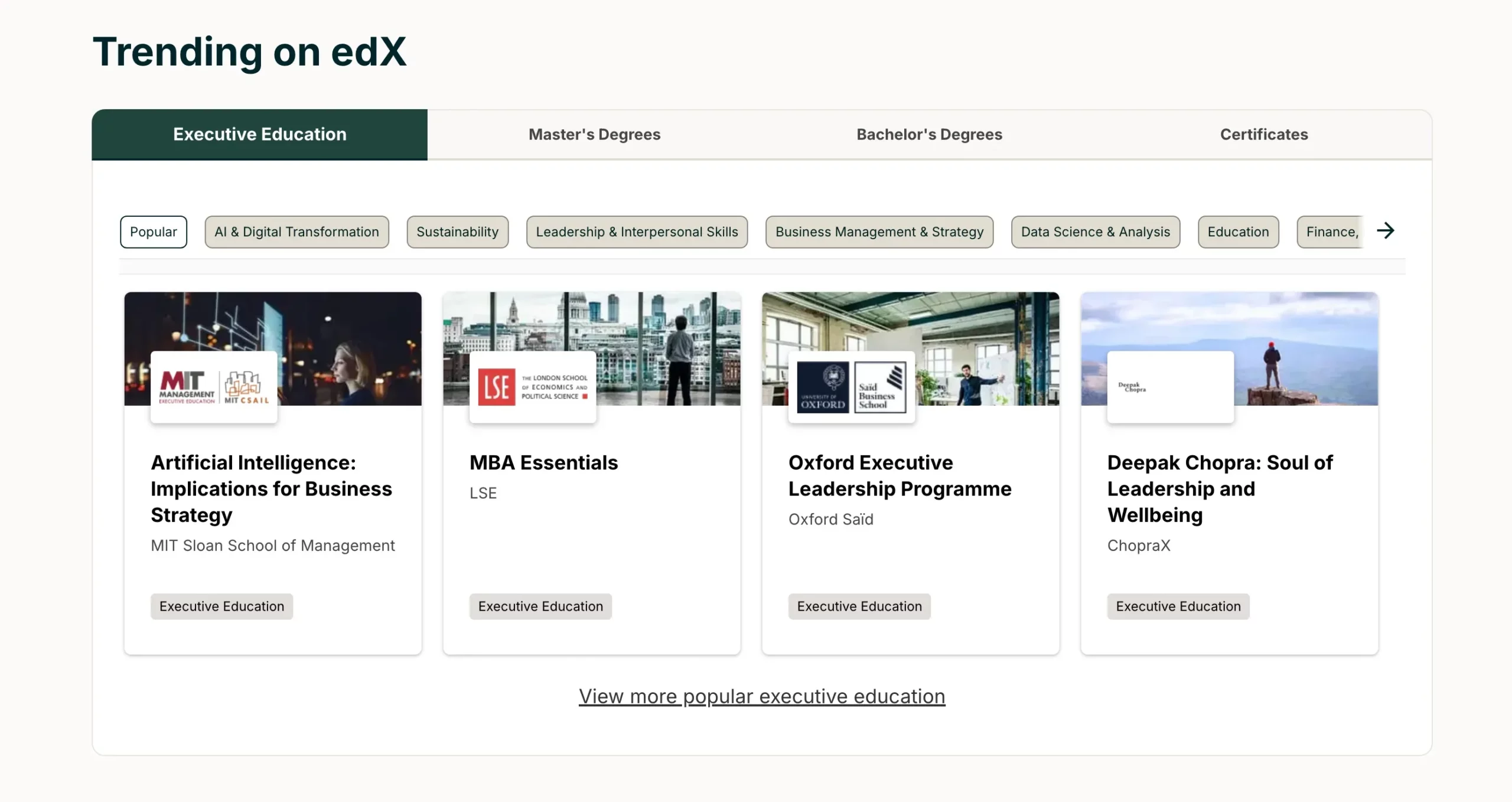
A verified certificate is awarded when you complete a single course on the verified track. A program certificate comes from finishing a full series, such as an XSeries or MicroMasters.
Two things to note. Every course inside a program must be completed on the verified track for the program certificate to be issued. And some archived courses on edX do not award certificates at all, so check the course status before you pay.
Winner: Coursera, for both variety and employer recognition. edX still wins if you want credit that transfers toward a degree.
Coursera vs edX: Learning Formats and Features
Both platforms offer several ways to study, from casual browsing to full degrees. Here is what each format actually gives you.
Coursera: Features
So Coursera offers its learners some very cool features below:
1. Audit: This is an extremely useful resource. Therefore, if you cannot afford the course or do not want to pay for it, you may audit it. When you audit a course, you can review the material and compare it to other courses, but you cannot earn a certificate or participate in quizzes or assignments.
2. Certified Course: Coursera’s basic process course is what you take there. The course is paid for, you enroll, and you begin learning and taking quizzes, assignments, and exams. After completing the course, you receive a certificate of completion.
3. Specialization: The thing about this is that it revolves around a single domain, which makes it different from others. If you want to specialize in a domain, you don’t take only one course but a bunch of related ones.
4. Degree: You do the same thing at a university. Here at Coursera, you’ll have a learning experience similar to that of a university student.
5. Financial aid: Those who cannot finance their studies are offered financial aid by Coursera, which is helpful.
edX: Features
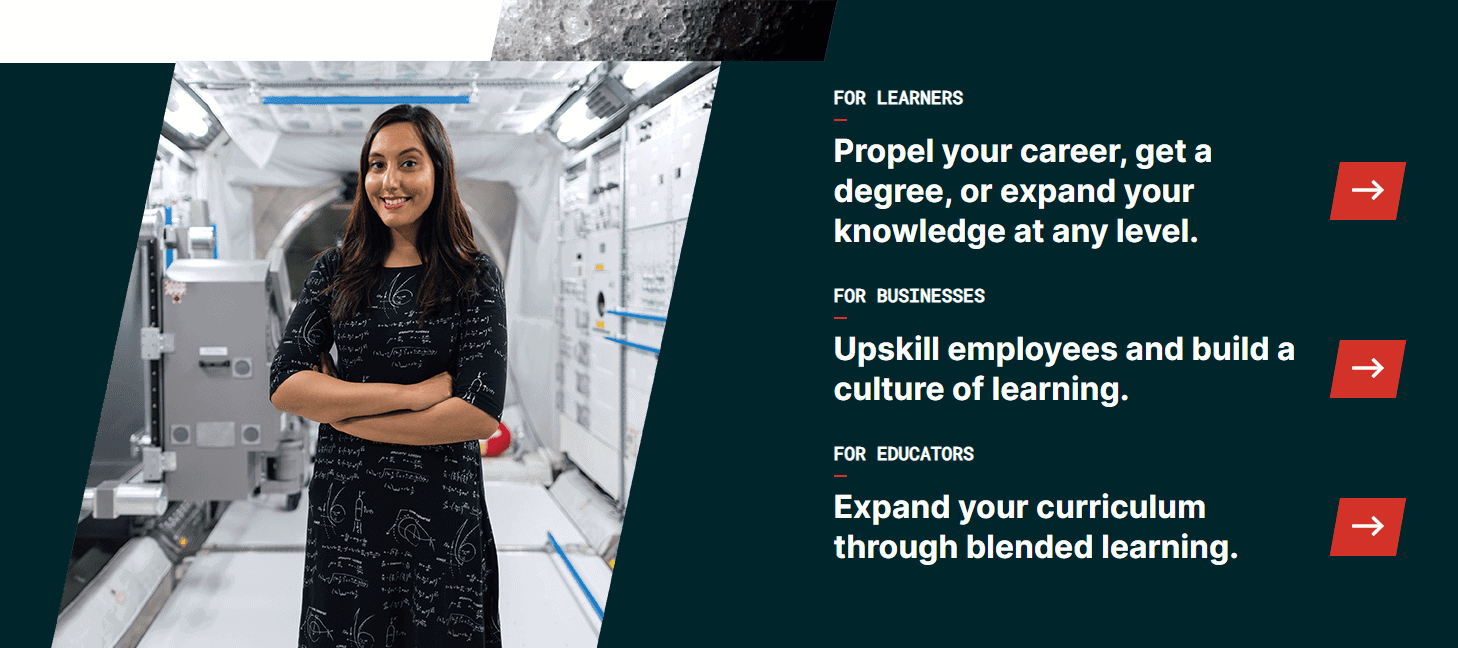
The following spatial features are available to learners on edX.
1. One-off Courses: Leisure is the focus of this category.
2. Micromaster Program: The purpose of this category is to help you develop existing skills.
3. Professional Certificates: You will find online master’s degrees in this category, which are designed to equip you with the necessary knowledge and skills to compete in today’s job market.
4. Global Freshmen Academy: First-year university students should apply to this category.
5. Xseries Program: Students who take the Xseries program gain a broad perspective on a single field.
You May Also Like This:
EdX vs Coursera: Certificate Options
There are two kinds of certificates offered by EdX:
Upon completion of an individual course, you will receive a verified certificate
If you complete a series of courses related to the program, you’ll receive a certificate
Certifications of both types can boost your marketability and make you more attractive to potential employers. The choice you make depends on how deeply you want to delve into a particular subject.
Coursera also offers certificates of completion. A cluster of classes designed to help you enter a new field can also lead to professional certificates.
Credentials recognized by the industry can also be obtained through some professional certificate programs.
EdX vs Coursera: Instructors
Instructors at edX generally come from member universities and are generally highly educated. Others are leaders in their organizations. In a similar vein, Coursera lecturers may be professors or professionals in their fields.
As both platforms offer highly qualified instructors, any certification you earn on either platform will be more valuable than what you earn on a platform where any instructor is qualified to teach.
EdX vs Coursera: University Affiliations
Who backs the courses matters, since the certificate carries the partner’s name, not the platform’s.
edX
edX works with more than 160 universities. The list includes MIT, Harvard, Berkeley, the University of Texas, Boston University, Georgetown, and Hong Kong Polytechnic.
Beyond individual courses and programs, you can earn a full master’s degree through the platform. Available fields include IT, accounting, cybersecurity, and engineering. Tuition starts around $9,920.
Coursera
Coursera partners with over 200 universities and organisations. Yale, Duke University, IBM, and Google are among them.
The degree options here go wider. You can earn a bachelor’s or a master’s, covering data science, computer science, business, and public health. Tuition starts around $9,000.
Verdict: Coursera has more partners and cheaper entry level degree pricing. edX partners are more heavily weighted toward elite research universities, which matters if brand recognition is your priority.
EdX vs Coursera: Available Courses
Both catalogues are large enough that subject coverage rarely decides the choice. Still, there are some differences worth noting.
Each platform lets you study at any level of commitment. Take one standalone course, work through a multi course program, or enrol in a full degree.
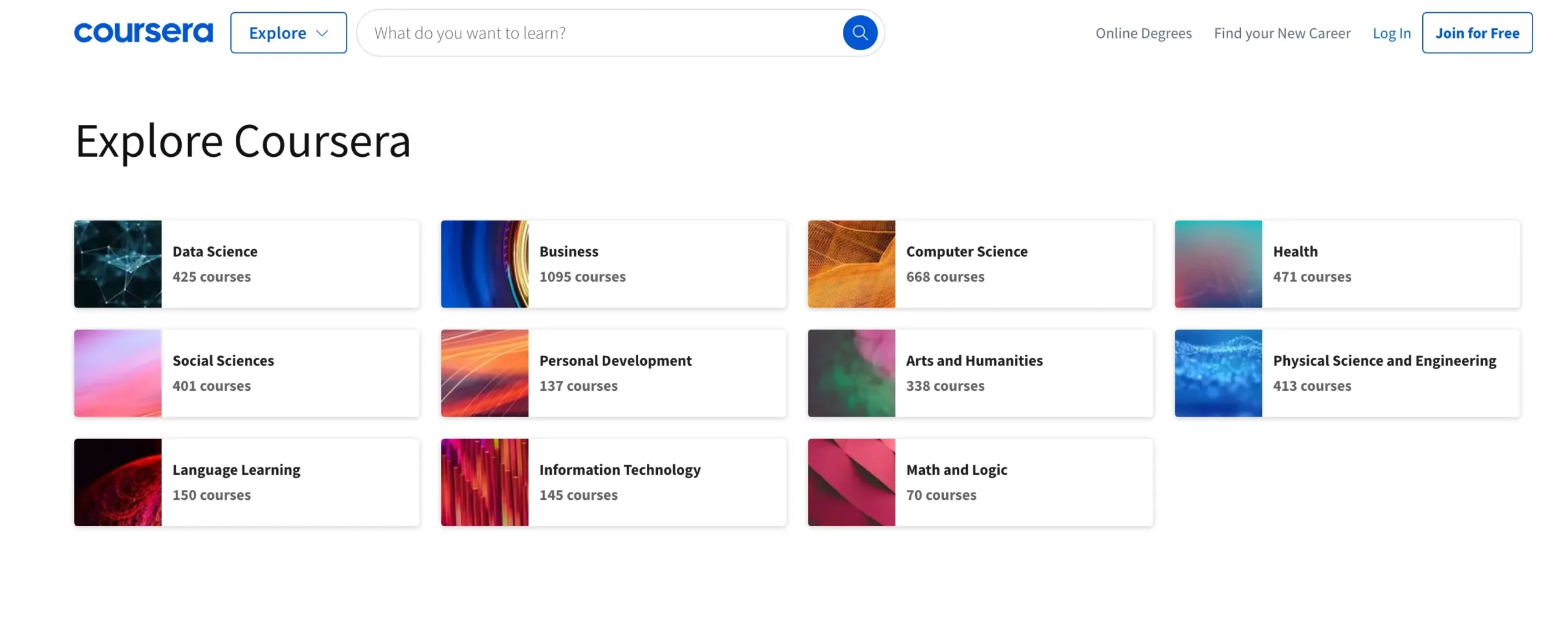
Coursera covers business, data science, language, health, social science, engineering, maths, and art. The data science and business categories are especially deep, since that is where most of its industry partnerships sit.
edX covers architecture, geography, business, science, design, finance, literature, history, and medicine. The humanities and pure science sections are stronger here, reflecting its university roots.
Both also run plenty of general interest and personal development courses, including parenting. edX goes further into lifestyle topics, with courses on beer and wine among them.
Verdict: Pick Coursera for tech and business depth, edX for humanities and academic sciences.
EdX vs Coursera: Course Formats
The videos in edX courses have been pre-recorded, which allows you to study whenever is convenient for you. Course content is available on desktop and mobile devices.
The edX classes can be digested at your own pace, but many must be completed within a certain time frame, usually 8-12 weeks.
Tests and assignments are usually due by the deadlines. In order to contact your instructor, you’ll need to post a message in the course’s discussion forum.
In the same way that edX offers on-demand video lectures, Coursera also offers online classes. You can pick and choose how you consume the content. Despite the fact that you can learn at your own pace, there are still assignments and assessments to complete.
The work of your classmates may be reviewed in some courses. You can create a post on the course’s discussion board if you need additional feedback on your work or want to interact with other students.
EdX vs Coursera: Pros and Cons
EdX
Pros
- Offers courses from top universities like Harvard and MIT.
- Many free courses are available with the option to pay for a certificate.
- High-quality academic content suitable for advanced learners.
- Self-paced courses for flexible learning.
Cons
- Fewer courses in non-academic subjects.
- Certificates can be expensive.
- Limited interaction with instructors.
Coursera
Pros
- A wide variety of courses, including professional and skill-based programs.
- Courses from leading universities and companies like Google and IBM.
- Offers full degree programs and professional certificates.
- Financial aid is available for some courses.
Cons
- Most courses require payment to access graded assignments and certificates.
- Some courses may be less in-depth compared to EdX
Quick links:
Free Online GED Classes: Classes, Online Practice Test, Study Guides
How Hard Is The LSAT Exam: The Truth About LSATs Difficulty!
Educative Review: Best Online Learning Platform For Software Developers?
FAQ About edX vs Coursera
Yes, with limits. An edX verified certificate proves you completed real coursework from institutions like MIT, Harvard, or Berkeley. That carries weight on a CV and on LinkedIn. What it will not do is replace a degree. No employer treats a $99 certificate as equivalent to four years of university. Its value is showing initiative and current skills, especially when you are changing fields. Where it counts most: MicroMasters credits, which can transfer into an actual master's programme.
Explain Yes. Verified certificates are legitimate, issued by the partner institution, and come with a unique verification link so employers can confirm them. Valid does not mean accredited in the university sense. A verified certificate is not academic credit. MicroMasters and degree programmes are the credit bearing options. One gap worth knowing. Audited courses give you no certificate at all, and archived courses do not issue them either.how the product works.
Neither wins outright. They serve different goals. Coursera is better for careers, thanks to Professional Certificates from Google, IBM, and Meta, plus a subscription that covers the catalogue for $399 a year. It also has more partners, over 200 versus 160. edX is better for academic learning and for free access. Audit almost anything at no cost, and MicroMasters can lead to real graduate credit. Rule of thumb: job hunting means Coursera, deep study means edX.
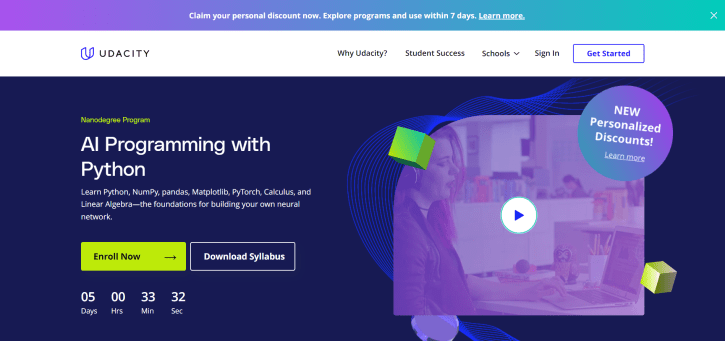
Depends what Coursera is failing to give you. For academic rigour and free auditing, edX. For hands on tech and coding with projects, Udacity or Educative. For creative and business skills at a low monthly price, Skillshare or LinkedIn Learning. For cheap one off courses, Udemy, though quality varies a lot. For IT certification prep, Pluralsight or CBT Nuggets. Coursera stays the safest pick for university branded credentials in one place.
Often yes, because the degree is not from Coursera. It is awarded by the partner university, and your diploma says so. Coursera is only the delivery platform. Pricing starts around $9,000 for bachelor's and master's programmes in data science, computer science, business, and public health. Compare that against campus tuition and the gap is large. Two honest caveats. You lose the campus network and in person access. And admission standards for these programmes are real, so not everyone gets in.
Yes, if you place it correctly. List completed certificates under a section called Certifications or Professional Development, never under Education. Include the issuing partner, since "Google IT Support Professional Certificate" reads far better than "Coursera course". Add the completion date and the verification link. What actually moves hiring managers is evidence. Mention the projects you built during the course. A certificate says you watched. A project says you can do the work.
Partly, on both. edX lets you audit most courses free with full access to lectures. Coursera offers free auditing on many courses too. You pay for the graded work, the certificate, and in Coursera's case ongoing access. Financial aid exists on both platforms if cost is the barrier. Practical tip: audit first. Finish two weeks of material before you spend anything. That alone tells you whether you will complete it.
Conclusion: edX vs Coursera 2026
Coursera takes the overall win, mainly on career outcomes. The Google and IBM Professional Certificates connect directly to real jobs, Coursera Plus at $399 a year is strong value for multiple courses, and the 200 plus partner network gives you room to move between subjects.
edX still deserves your attention for two things. Free auditing with no pressure, and MicroMasters credits that feed into genuine graduate degrees. For academic depth, it is the better platform.
So decide by intent, not by brand. Want a new job in the next year? Start with a Coursera Professional Certificate. Want to explore a subject or move toward a master’s? Start auditing on edX.
Either way, pick one and finish it. An unfinished course from the better platform still counts for nothing.
One note before you publish this. Verify the current Coursera Plus and edX certificate prices on their sites, since both change tiers frequently, and answer engines will quote whatever number you list.
Comments
Be the first to leave a comment.