
Are you looking for a powerful marketing strategy that delivers real results and builds strong customer relationships? Then referral marketing should be at the top of your list.
In a world where people are tired of ads and skeptical of brands, referrals — recommendations from friends, family, or people they trust — cut through the noise.
They don’t just boost awareness — they drive higher conversions, stronger loyalty, and better long‑term growth.
Referral marketing isn’t a passing trend. It’s becoming a fundamental part of how successful businesses attract and keep customers.
Companies like PayPal and Dropbox famously used referral programs to grow at astonishing rates — PayPal’s user base grew by 3900% in just 15 months through referrals.
This isn’t a one‑off success; it’s proof of how effective referral marketing can be.
As we move through 2025, referral marketing continues to grow in influence.
This guide breaks down the most important statistics, trends, and strategies so you can use referral marketing to boost your business growth.
Referral Marketing Statistics 2026: What the Data Tells Us

Referral marketing isn’t just effective — it’s powerfully effective. The data clearly shows that referrals outperform many traditional marketing channels:
| Statistic | What It Means |
|---|---|
| Referral marketing generates 3–5× higher conversion rates | Referrals turn more leads into paying customers. |
| 65% of new business comes from referrals | Referral sources are often the main driver of growth. |
| 20–50% of purchases are influenced by word of mouth | Many buying decisions are shaped by personal recommendations. |
| 90%+ consumers trust word‑of‑mouth more than ads | Trust drives referrals. |
| Companies with referral programs see 86% more revenue | Referral programs directly impact earnings. |
| 92% of consumers trust referrals from friends and family | Personal recommendations are trusted above all else. |
| 84% of B2B decisions begin with a referral | Referrals matter in business sales too. |
| 71% of consumers are influenced by social media referrals | Social platforms help referrals spread faster. |
| 27% of sales reps get half or more of their new clients from referrals | Referrals make sales teams more effective. |
| Referred customers bring 25% more profit and have 18% higher loyalty | Referrals produce better long‑term customers. |
These numbers show that referrals don’t just drive leads — they drive valuable, loyal customers. Let’s explore how.
Also read about: Content Marketing Statistics
Why Referral Marketing Works So Well
Referral marketing is effective because a referral comes with built‑in trust.
When someone hears about a brand from a friend or trusted source, they are far more likely to buy. Referral leads are “pre‑qualified” — they already have a positive perception before they interact with your brand.
Because referred customers trust you more:
- They convert at 3 to 5× higher rates
- They tend to stay loyal longer
- They bring 25% more profit
- They are 18% more loyal than non‑referred customers
- They have 16% higher lifetime value
This means referral customers are not just one‑time buyers — they are long‑term assets.
Also read about: Mobile Marketing Statistics
Top Referral Methods Marketers Use in 2026
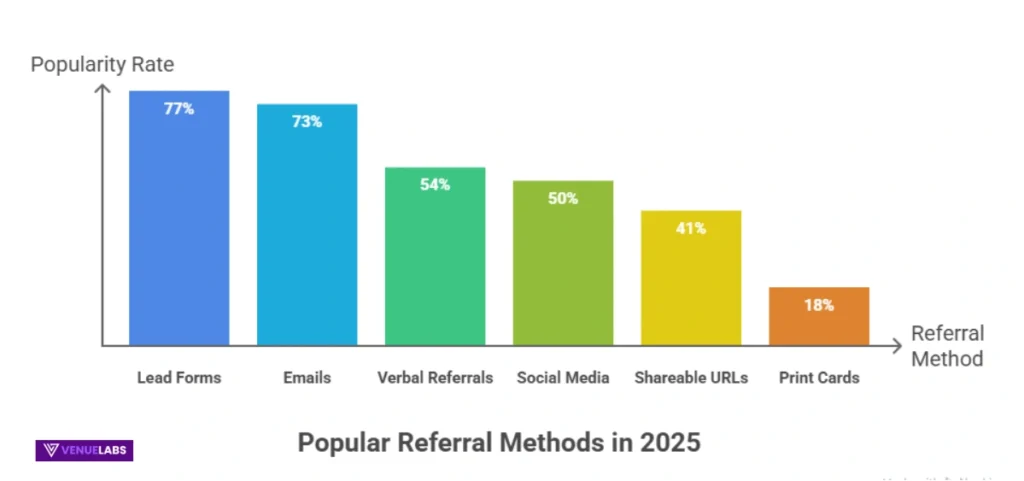
Referral marketing isn’t random — marketers use structured methods to generate referrals. According to recent data:
| Referral Method | % of Marketers Using It |
|---|---|
| Lead Forms | 77% |
| Email Referrals | 73% |
| Verbal Recommendations | 54% |
| Social Media Referrals | 50% |
| Shareable URLs | 41% |
| Print Cards | 18% |
Lead forms and email remain the most effective ways to capture and track referrals. But social platforms and shareable links are growing fast too.
Also read about: Latest Digital Marketing Statistics
How Much Business Comes From Referrals?
Referrals are not just a nice bonus — for many companies, they account for the majority of new customers.
- 65% of new business comes from referrals.
- 82% of small businesses say referrals are their main source of customers.
- Software companies get 20–50% of new customers through referrals.
This shows that referrals are foundational — not supplementary — to growth across industries.
Word of Mouth: The Oldest and Most Trusted Form of Marketing
Word of mouth (WOM) is one of the oldest forms of marketing — and it’s still one of the most effective.
Key Word‑of‑Mouth Facts
- Word‑of‑mouth influences 20–50% of purchase decisions
- 64% of marketers say word‑of‑mouth is the most effective marketing form
- WOM is 2–10× more effective than paid advertising
- 23% of customers actively talk about products with friends every day
However, not all word of mouth is positive — 21% of brands have lost trust due to negative referrals. This highlights the importance of delivering great customer experiences.
Referral Programs: Turning Trust Into Predictable Growth
Organic referrals are great, but structured referral programs can amplify results.
Benefits of Referral Programs
Companies with structured programs see:
- 86% more revenue growth
- Referred customers are $0.45 more profitable per day
- Lower customer acquisition cost (CAC) — $23.12 less per referred customer
- 60% higher ROI over six years
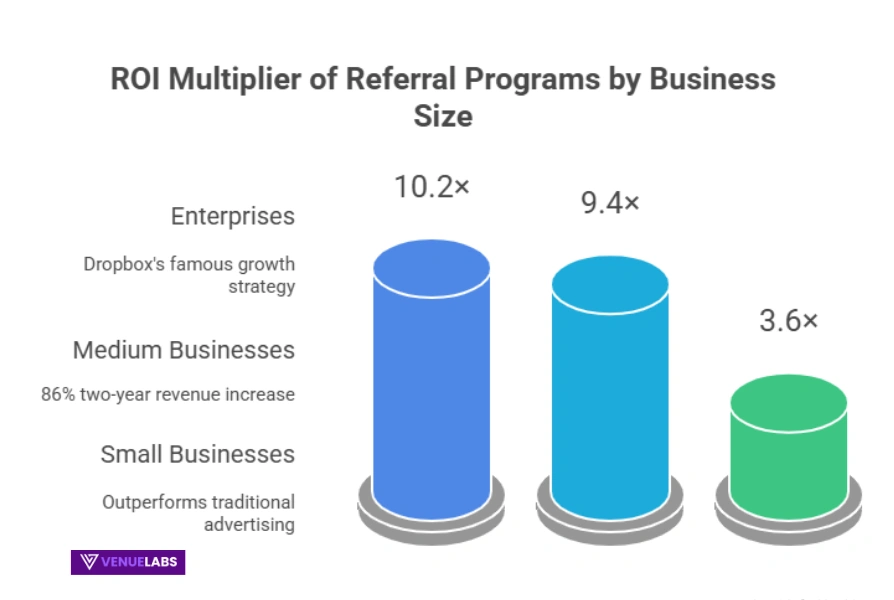
- Referral marketing ROI:
- 10.2× for large companies
- 9.4× for medium businesses
- 3.6× for small businesses
Referral programs don’t just bring more customers — they bring more profitable customers.
Trust Still Outpaces Advertising
Consumers trust personal recommendations far more than ads:
- 92% trust friends and family referrals
- Only 36% trust online video ads
This trust gap shows why referral marketing continues to outperform many advertising strategies.
Referred Customers Spend More and Stay Longer
Referred customers aren’t just loyal — they spend more.
- They spend 200% more than average customers.
- They are 4× more likely to refer others.
- They have 37% higher retention rates.
For companies looking for sustainable growth, this makes referral customers extremely valuable.
B2B Referral Marketing: Critical for Business Sales
Referral marketing matters in B2B too. In fact, it’s often foundational.
B2B Referral Insights
- 84% of B2B decisions start with a referral
- Referrals influence 90%+ of B2B purchases
- 87% of sales and marketing work better when referral marketing is used
- 86% of B2B companies with referral programs see revenue growth
Quality of B2B Leads
- 78% of B2B marketers say referrals generate great leads
- 82% of sales leaders agree referrals bring the best leads
- Referrals help create 30% more leads
- 70%+ say referred leads close faster
In B2B sales, referrals aren’t optional — they’re often central to closing deals.
Social Media Amplifies Referral Reach
Social platforms extend referral reach faster and further.
Social Media Referral Stats
- 71% of consumers are more likely to buy from a social referral
- Social media accounts for 31% of new business growth
- 78% of consumers are influenced by brand content on social platforms
- 59% of Pinterest users bought something after seeing it
- 33% of Facebook users bought something from a friend’s post
- 55% share their purchases on social media
Offering incentives boosts social referrals:
- 88% would like incentives for sharing online
- 95% of millennials want rewards for sharing
Social platforms turn referrals into scalable marketing channels.
Referral Marketing Across Generations
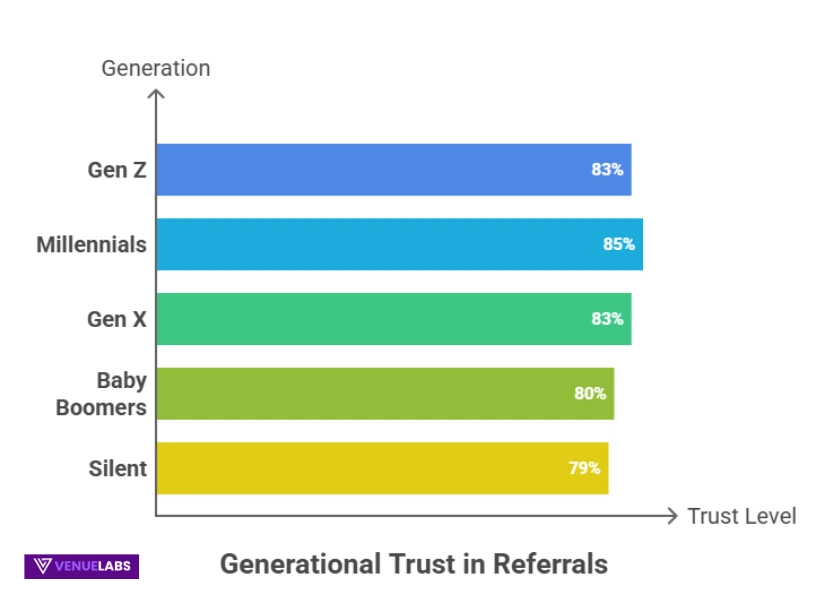
Trust in referrals isn’t limited to one age group — it’s shared across generations:
| Generation | % Who Trust Referrals |
|---|---|
| Gen Z | 83% |
| Millennials | 85% |
| Gen X | 83% |
| Baby Boomers | 80% |
| Silent Gen | 79% |
Even younger Gen Alpha influences family purchases heavily, showing referral power is growing.
Also:
- 83% of customers are ready to refer after a positive experience
- 91% of people share good deals and offers with friends and family
This proves strong experiences lead to more referrals.
Sales Reps and Referrals: Better Leads, Bigger Wins
Referrals help sales teams too:
- 27% of sales reps get 50% or more new clients through referrals
Because referral leads already trust the brand, sales teams spend less time convincing and more time closing.
Employee Referrals: Hiring and Retention Benefits
Referral marketing also works in hiring:
- 84% of companies have employee referral programs
- Employee referrals account for 30–50% of hires
- Referral hiring saves around $3,000+ per hire
- Referred candidates are:
- 2.6–6.6% more likely to accept offers
- 15× more likely to be hired
- Hired faster (29 days vs. 39 days)
- 25% more profitable for the company
- 71% express job satisfaction vs. 56% for others
Referral hiring boosts quality, speed, and satisfaction.
Incentives & Rewards Fuel Referrals
Rewards drive referrals — but the type of reward matters:
Top Customer Motivators for Referrals
| Reward Type | % Motivated |
|---|---|
| Cash | 58% |
| Free products/services | 46% |
| Gift cards | 41% |
| Points | 32% |
| Store credit | 29% |
| Custom rewards | 27% |
| % discount | 26% |
| Store gift card | 21% |
| Subscription time | 10% |
| Internal currency | 10% |
Cash and free items top the list.
But friction still discourages some people:
- Rewards too low — 29%
- Limited ways to share — 25%
- Referral process too slow — 20%
- Hard to track referrals — 20%
- Hard to find programs — 18%
The easier and more rewarding the program, the more referrals you get.
Industries Benefiting Most
Some industries see especially strong referral influence:
- Electronics: 52%
- Professional/in‑person services: 49%
- Health & beauty: 40%
- Home & kitchen: 40%
- Software/digital services: 33%
- Financial services: 33%
- Clothing/apparel: 33%
Referrals are powerful across many markets.
The Impact of Negative Reviews
Good feedback drives growth — bad feedback can hurt:
- A single bad review can cost up to 30 lost sales
- 52% stop considering a brand after hearing a negative review
- 86% become hesitant to buy after a negative mention
- 92% of shoppers only consider businesses with 4★+ ratings
Maintaining reputation is crucial — referral marketing works best when your brand delivers exceptional experiences.
FAQs About Referral Marketing Statistics
1. What is the success rate of referrals?
Referred customers are 16% more valuable, generate 25% more profit, and are 18% more loyal than non-referred customers.
2. What is referral marketing?
Referral marketing encourages customers to recommend your business to others, often with rewards. It relies on trust and word-of-mouth to gain new customers.
3. Why do customers trust referrals?
Because they come from friends or family — people they know and trust — making referrals more credible than ads.
4. What are the statistics for B2B referral programs?
84% of B2B purchases start with a referral. These programs bring in 30% more leads, close deals faster, and lead to revenue growth in 86% of companies.
5. Do referral programs increase customer loyalty?
Yes. Referred customers are 18% more loyal and stay 37% longer. Referrers also feel more connected to the brand.
Also Read:
- Internet User Statistics
- Semrush AI Statistics
- Google Searches Statistics
- Quora Statistics
- LinkedIn Statistics
Conclusion: Don’t Get Left Behind
Referral marketing isn’t just effective — it’s essential. In 2025:
- Referral customers convert more
- They stay longer
- They spend more
- Referral marketing delivers high ROI
- Referrals build trust faster than ads
Whether your business is B2C, B2B, online, or local — referrals drive growth.
Customers trust personal recommendations up to 10 times more than ads. By leveraging referral programs, incentives, and excellent customer experience, you turn loyal customers into your most powerful marketing force.
Referral marketing isn’t optional — it’s a competitive edge.
