
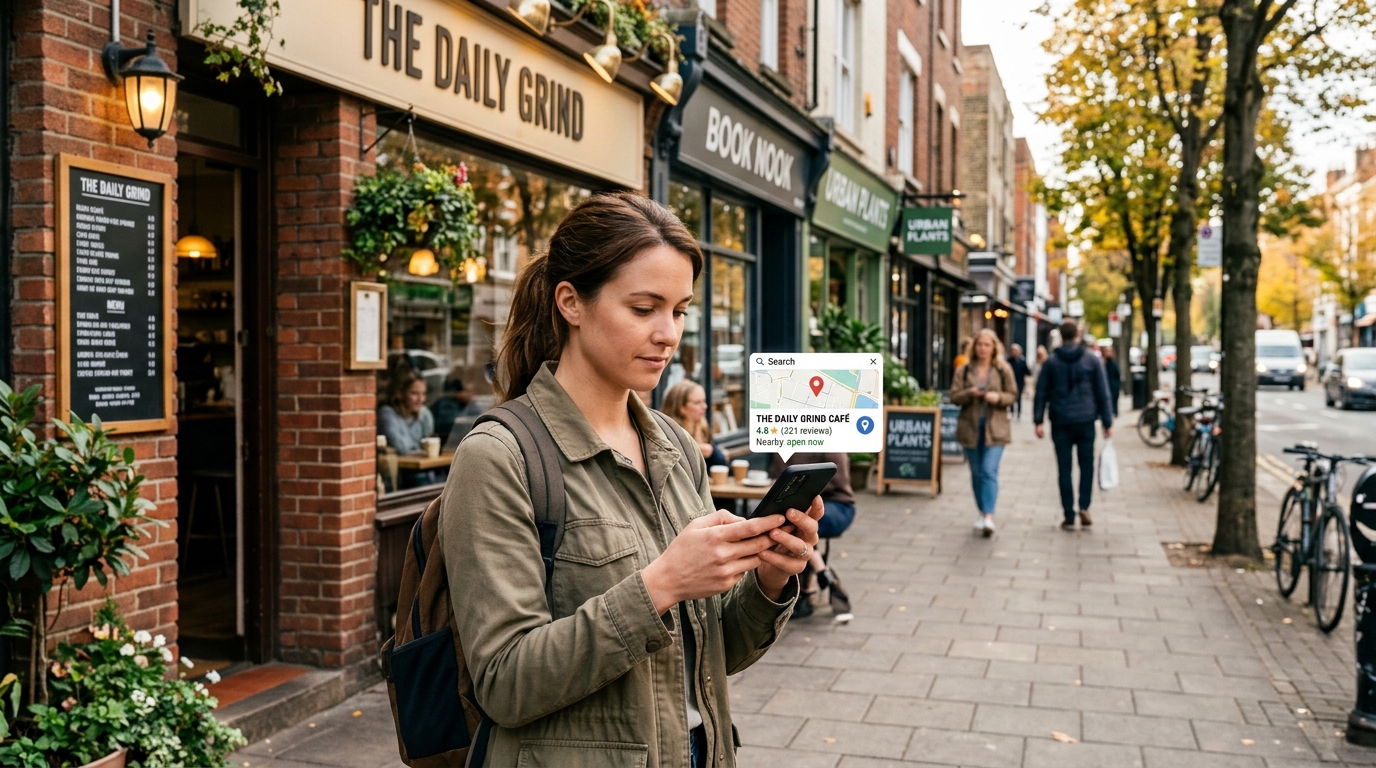
Running a physical venue — whether that is a restaurant, event space, fitness studio, or retail shop — has always involved navigating Google’s local search algorithm. But 2026 is bringing a new layer of complexity that local business owners cannot afford to ignore. AI-powered search is changing how customers find venues, and the businesses that understand this shift are pulling ahead fast.
In 2026, more businesses and websites are using structured data to make their content stand out. When search engines present more detailed and relevant information in their results, users are more likely to find what they are looking for — and structured data is one of the primary mechanisms that makes that happen for local and venue-based businesses.
For a venue, this is not abstract. When someone asks Google AI Mode “best event venues for a 50-person corporate meeting in [city],” the answer is not pulled from a simple keyword match anymore. It is assembled from structured signals — your schema markup, your Google Business Profile data, review markup, capacity information, and entity clarity.
Venues that have invested in this infrastructure show up in AI-assembled answers. Venues that have not are invisible in them.
Structured data for venues specifically
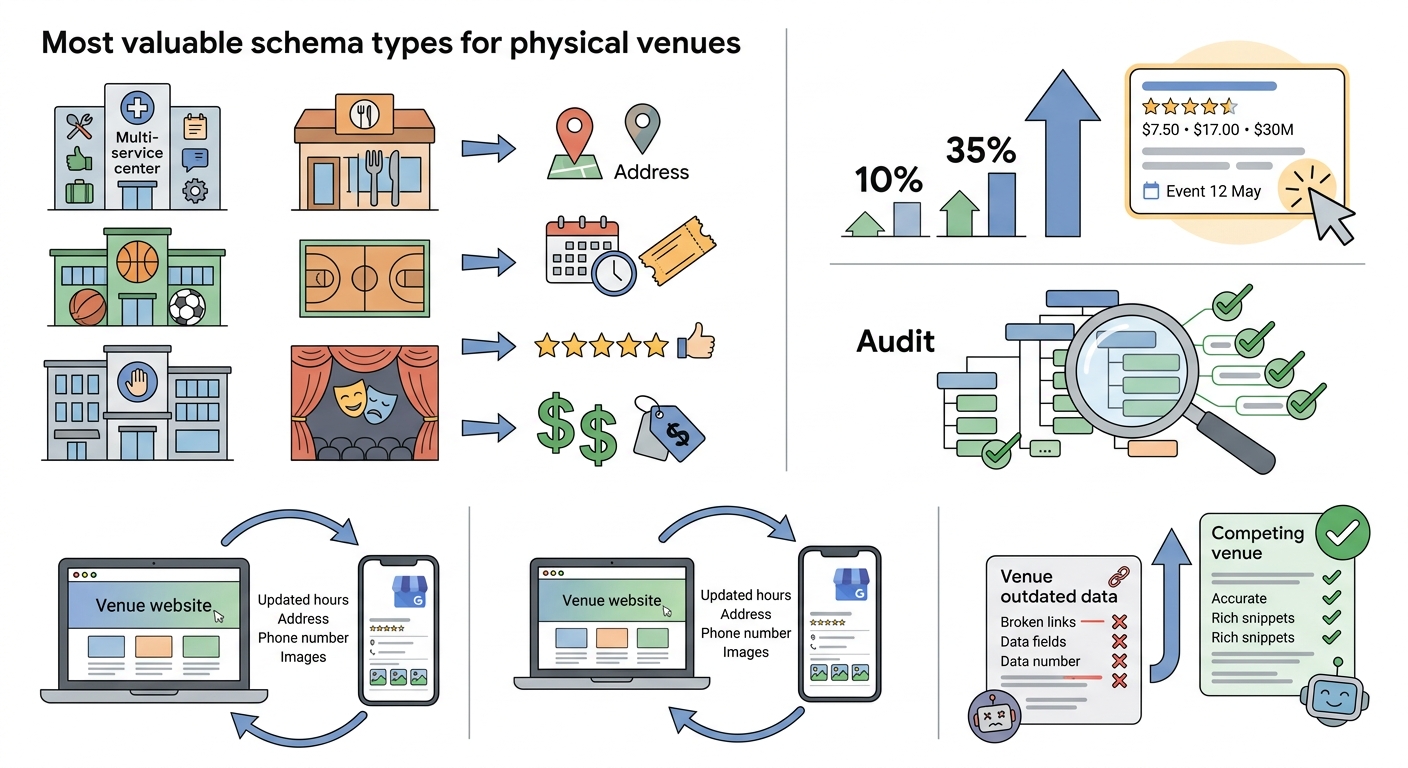
The most valuable schema types for physical venues in 2026 are LocalBusiness (or more specific subtypes like FoodEstablishment, SportsActivityLocation, or EventVenue), Event markup for specific bookable dates, AggregateRating for review visibility, and Offer markup for pricing and packages.
Pages with properly implemented structured data earn 35% higher click-through rates through rich results in Google Search. A structured data audit is one of the highest-ROI technical SEO investments available in 2026, particularly for businesses where accurate structured information — hours, location, pricing, reviews — is directly tied to booking intent.
The practical implication for venue operators is that your Google Business Profile and your website schema need to be consistent, accurate, and regularly updated.
Outdated information — wrong hours, old pricing, missing phone numbers — is not just an inconvenience. In AI search, it can result in your venue being deprioritized entirely because the system cannot verify your data against a consistent source.
What customers are actually asking AI search
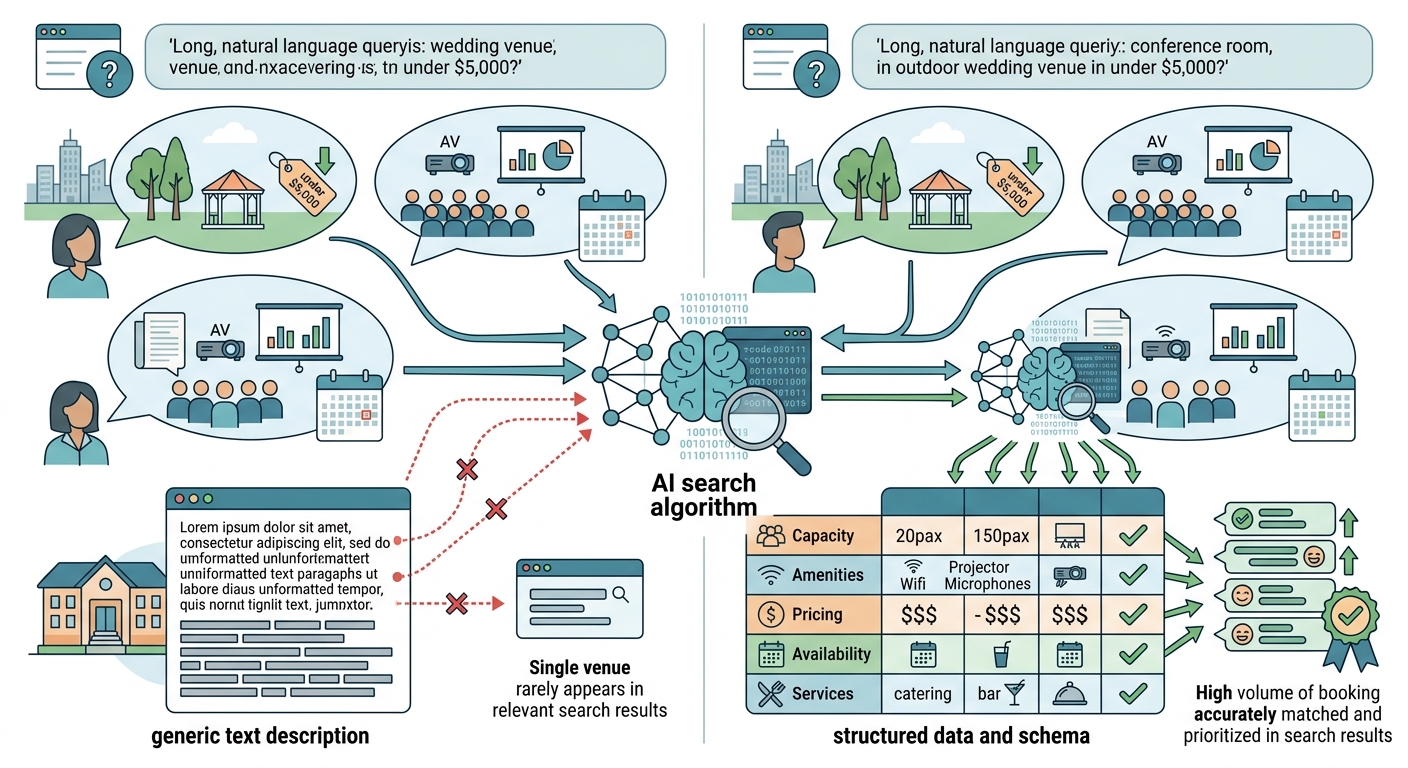
The nature of search queries for venues has shifted. People are asking longer, more specific questions: “outdoor wedding venue with catering under $5,000 near [city]” or “conference room for 20 people with AV equipment available Saturday.” These are natural language queries, and AI search systems are interpreting them by matching structured data from venue pages against the specific requirements in the query.
Venues that have structured data covering capacity, amenities, pricing ranges, available dates, and service offerings are being matched to these queries at a significantly higher rate than venues with generic text descriptions and no schema.
💬 Reddit signal: r/eventplanning and r/weddingplanning are full of threads this year where venue clients describe how they are finding options differently. More people mention using AI search or asking Perplexity for venue recommendations. Several threads specifically note that venues that appear with rich details — pricing, photos, capacity, reviews — get contacted first.
🐦 Twitter/X signal: Local SEO practitioners on X have been sharing case studies showing significant traffic increases for venue websites after implementing proper LocalBusiness and Event schema. One widely circulated thread showed a 40%+ increase in qualified leads for an event venue within 90 days of a structured data overhaul.
Local search is not getting simpler — it is getting richer and more structured. Venues that invest in the underlying infrastructure now will have a durable advantage over competitors who are still relying on basic Google Business profiles without complementary on-site schema.
Quick Links:


Comments
Be the first to leave a comment.